Frank Nazar Inherits the Blackhawks' Top Center Job and Nobody Is Drafting Him
By Verdexed NHL Desk
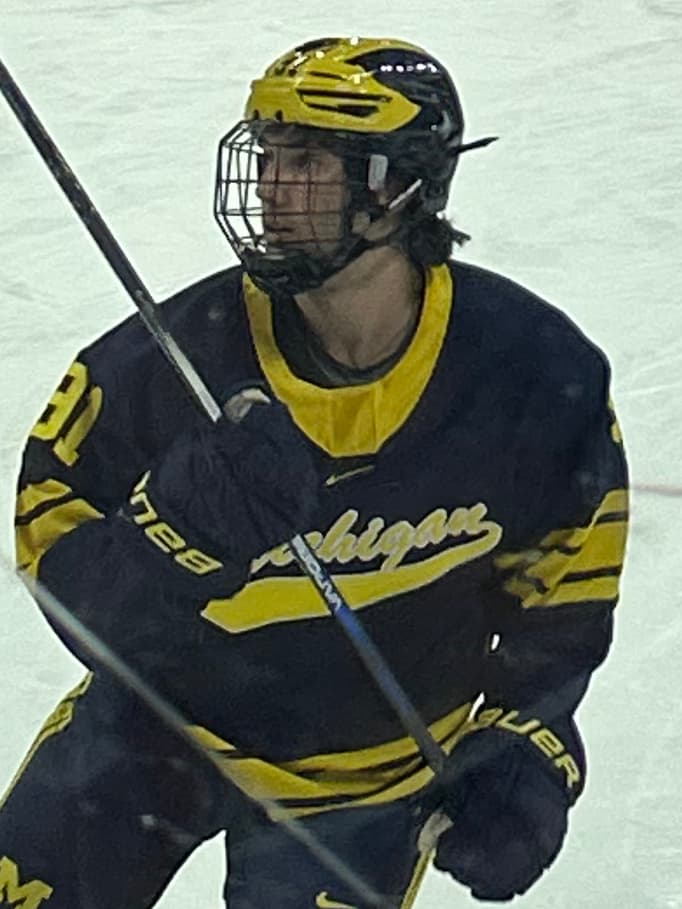
Connor Bedard will miss the start of the 2026-27 season after undergoing shoulder surgery in early July, with a recovery timeline reported at roughly four months that would put his return around early November. Bedard hurt the shoulder while training in Vancouver in the days before the procedure. He led Chicago last season with 75 points, 30 goals and 45 assists, in 69 games.
The fantasy consequence is not really about Bedard, whose managers have known about this for six weeks and have already adjusted. It is about who plays his minutes for the first month, and the answer appears to be Frank Nazar.
The opportunity is bigger than it looks
Replacing a team's leading scorer at center is not simply about the five-on-five minutes. It is about the power play. First-unit power play time is the single largest driver of fantasy point production for forwards outside the elite tier, because it concentrates offensive-zone time, shooting opportunities, and secondary assists in a way that even-strength minutes never do.
When a team's top center is unavailable, that first-unit spot goes to someone. On a Chicago roster that has been rebuilt around young forwards, the most likely beneficiary is the young center who is already trending toward that role. Nazar has been identified around the league as the player stepping into the top center job while Bedard recovers.
The window is finite and that is precisely why it is valuable in fantasy. A month of first-line, first-power-play minutes is roughly 12 to 15 games of inflated opportunity, which for a player being drafted in the late rounds represents a meaningful share of the value you paid for. And if he performs during that window, the role does not automatically disappear when Bedard returns. Teams that find a functioning second-line center do not always break it up.
Fantasy fallout
Nazar should be on every draft board in leagues of 12 teams or more, and he is the sort of player who goes undrafted in shallower formats because his name does not carry weight. That is the inefficiency.
The draft-day case is straightforward: you are buying a guaranteed month of elevated deployment at a price that assumes none of it. In a category league, the specific value is in shots and points, both of which scale directly with power play time. In points-only formats, the case is slightly weaker but still positive, because point production for a young center is almost entirely a function of who he plays with.
The risk is honest and should be stated. Young centers handed a top role in an injury window frequently do not hold it, and the Chicago roster around him is not deep enough to guarantee production regardless of deployment. If the linemates are not there, the minutes will not convert.
There is a second Chicago name worth attaching to this. Tyler Bertuzzi has been flagged as an affordable source of goals in the back half of drafts, and a winger who benefits from playing alongside whoever is running the top line has a direct correlation with the Nazar bet. Pairing them is a legitimate way to concentrate exposure to one team's early-season opportunity.
What Bedard managers should do
Draft him at the discount and stash him. A player of Bedard's caliber missing the first month is a straightforward IR-stash play in any league with an injured reserve slot, and the price should reflect roughly 15 missed games rather than a full downgrade in tier.
The one caution is the injury type. This is described as the third major setback of Bedard's young career, and shoulder surgery in a player who takes contact and shoots a high volume is not a trivial procedure. A four-month timeline is a projection, not a guarantee, and shoulder recoveries in hockey have a history of extending. Build the possibility of a mid-November return into your plan rather than assuming the earliest date.
The Verdexed model take
Our fantasy hockey projections treat power play unit assignment as the highest-leverage single input for forwards, ahead of even-strength ice time and well ahead of prior-season point totals. That is not a stylistic choice: the gap in point production between a first-unit and second-unit power play forward on the same team is consistently larger than the gap between their five-on-five roles.
On that basis, our model projects a substantial increase in Nazar's per-game point rate for the games Bedard misses, followed by a partial retreat once Bedard returns. The rest-of-season projection lands well above where his draft position implies, driven almost entirely by that first month.
Bedard's own projection is reduced by the missed games and essentially unchanged on a per-game basis. Our model does not apply a lingering performance penalty for a shoulder procedure at his age, though it does widen the uncertainty band on his return date.
What to do in your league
If you are drafting in the next few weeks, target Nazar two to three rounds later than his projected first-month production justifies, which in most leagues means simply taking him whenever you have a spare bench slot in the back third of your draft. He is the cheapest way to buy guaranteed opportunity in the entire draft pool.
If you own Bedard, do not panic-trade him at a discount for a month of missed games. The correct structure is Bedard on your IR slot and Nazar on your bench, which turns a single injury into two assets and covers you for both outcomes.
And watch the preseason line combinations when camps open next month. Confirmed usage is worth far more than August speculation, and the Chicago power play units in exhibition games will tell you whether this bet is live or whether the team has other plans for those minutes.