Colston Loveland Is the 2026 Breakout Tight End: Ben Johnson Is Backing a 1,000-Yard Leap
By Verdexed NFL Desk
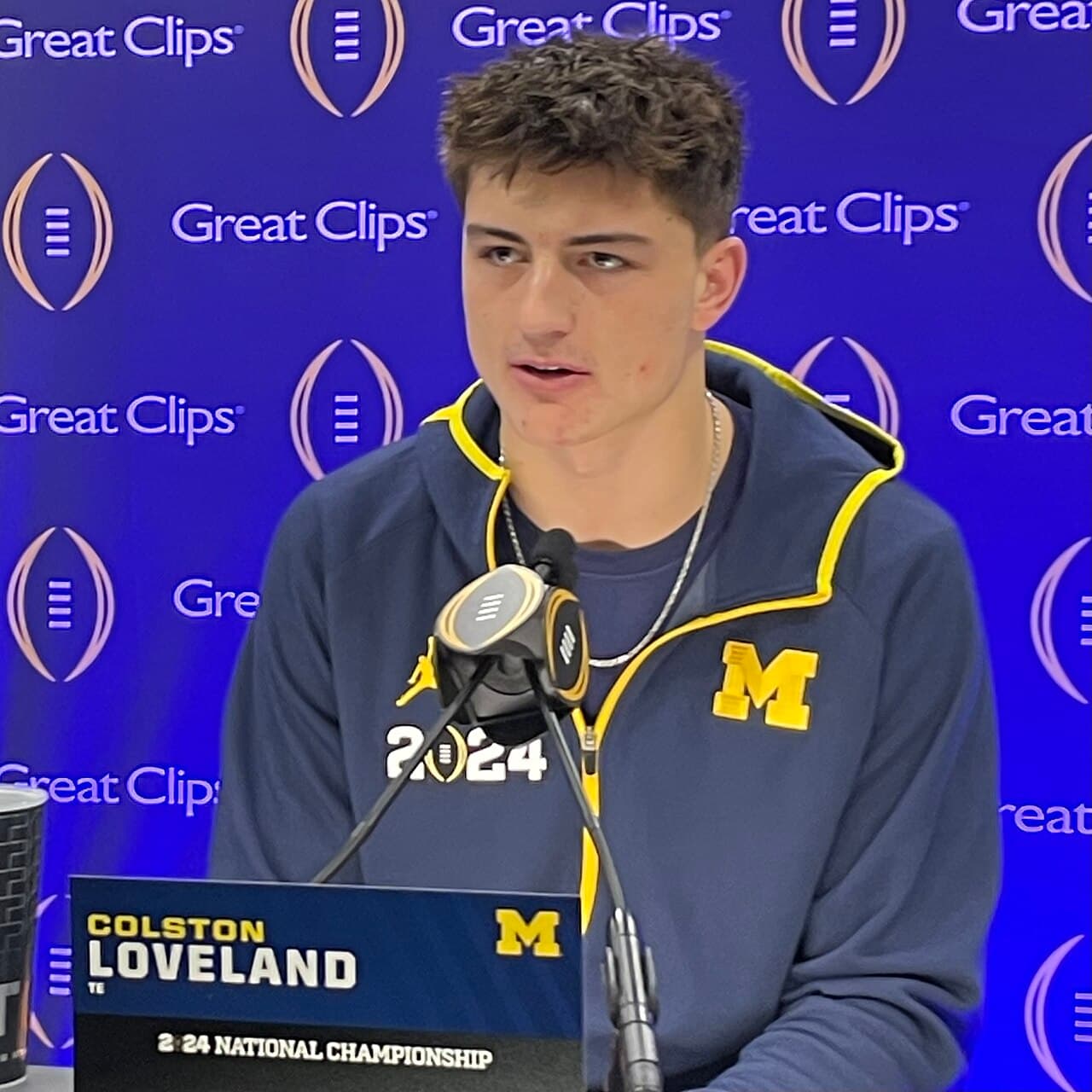
Colston Loveland is the breakout tight end fantasy managers should be circling for 2026. The Chicago Bears' second-year tight end is in line to be the team's leading pass-catcher, his head coach is publicly talking up a major leap, and the departure of DJ Moore to Buffalo has cleared a large share of targets. The result is a high-end TE1 available at a TE3 price, and that gap is where value lives at a thin position.
Loveland already showed real fantasy chops as a rookie. He led the Bears in receptions, receiving yards, and touchdowns in 2025, finishing with a reception total in the high 50s, yardage north of 700, and a handful of scores. More telling for projection purposes, he closed the season strong: from midseason on, he was one of the most productive fantasy tight ends in the league, trailing only the position's elite. A rookie tight end finishing that hot is a strong leading indicator for a Year 2 jump, because the position is notorious for slow starts and second-year breakouts.
Ben Johnson is selling the leap
The coaching endorsement matters. Head coach Ben Johnson has spoken about expanding Loveland's role, framing the offseason work as taking his route tree to the next level, and Loveland himself has embraced a 1,000-yard goal for the season. Public coach-speak should always be filtered, but the substance here, a maturing route tree plus an expanded role, lines up with the on-field trajectory rather than contradicting it. When the scheme designer is openly planning to feature a player, that is a usage signal.
Johnson's offensive track record adds weight. He has a history of designing productive roles for pass-catchers, and a Year 2 quarterback in Caleb Williams who should be more comfortable in the system gives Loveland a passer trending in the right direction.
The vacated targets change everything
The single biggest tailwind is the DJ Moore trade. Moore commanded a large target share, and his move to Buffalo opens up roughly a hundred targets that have to be redistributed. Some will flow to the remaining wide receivers, with Rome Odunze and Luther Burden III competing for outside and slot work, but a tight end who already led the team in receiving is a natural beneficiary of vacated volume. More targets at a position where volume is scarce is the recipe for a fantasy breakout.
The receiver pecking order behind Loveland is unsettled, which is actually a point in his favor: in a corps without a clearly established alpha receiver, a trusted, ascending tight end can emerge as the quarterback's most reliable option.
Fantasy fallout: a high-end TE1 at a discount
The actionable read is to draft Loveland as a high-end TE1 and pounce if his price slips. He projects in the TE3 range in early consensus, behind the established elite at the position, but his combination of vacated targets, a strong late-season finish, and a coach openly featuring him gives him top-three upside. At a position where the drop-off after the top tier is steep, locking in a player with this kind of ceiling at a non-premium cost is exactly the edge fantasy managers should chase.
The risk is the receiver competition. If Odunze or Burden commands a larger share than expected, it could cap Loveland's target ceiling. But even in that scenario, his role as a reliable middle-of-the-field target gives him a solid floor, and the upside case is worth the modest risk at his price.
Why second-year tight ends break out
The Year 2 leap is not just optimism; it reflects a real pattern at the position. Tight end is the hardest spot for rookies to produce because of the blocking responsibilities, the complexity of the route concepts, and the physical adjustment to NFL defenders. Players who flash late in their rookie season, as Loveland did, frequently take a substantial step forward the following year once the game slows down. The position's history is full of tight ends who were quiet as rookies and became fantasy starters in their second seasons, and Loveland's strong finish puts him ahead of that typical curve.
That developmental arc, combined with the concrete situational tailwinds of vacated targets and a coach committed to expanding his role, is what separates Loveland from a speculative breakout call. The projection rests on both the player-development pattern and the opportunity, which is a sturdier foundation than hype alone. Managers who understand how tight end production tends to arrive should be comfortable paying a TE3 price for a player checking this many of the breakout boxes.
The Verdexed model take
Verdexed's model values tight ends primarily through target share and red-zone usage, and Loveland scores well on both. The model projects him as a clear TE1 with a realistic path to a top-three finish if the vacated Moore targets break his way and Williams continues to develop. The central projection has him as a stable starter; the ceiling, the one Johnson and Loveland are publicly chasing, is a season approaching 1,000 yards that would return top-tier value at a value-tier cost.
Net read: Loveland is a buy and one of the better value plays at tight end. The position's scarcity makes a high-floor, high-ceiling option at a TE3 price especially valuable.
What's next
Training camp will clarify the receiver hierarchy and how Johnson distributes the Moore targets. Watch whether Loveland is used as a true featured option or shares the spotlight with the wide receivers. For fantasy managers, the move is to draft him as a TE1 with upside, take advantage if the Bears' wide receiver hype pushes his price down, and bank on the vacated targets plus the coaching endorsement delivering the Year 2 leap that tight ends so often make.