Carnell Tate Missed Wednesday and the Titans Cannot Afford a Thin Receiver Room
By Verdexed Fantasy Desk
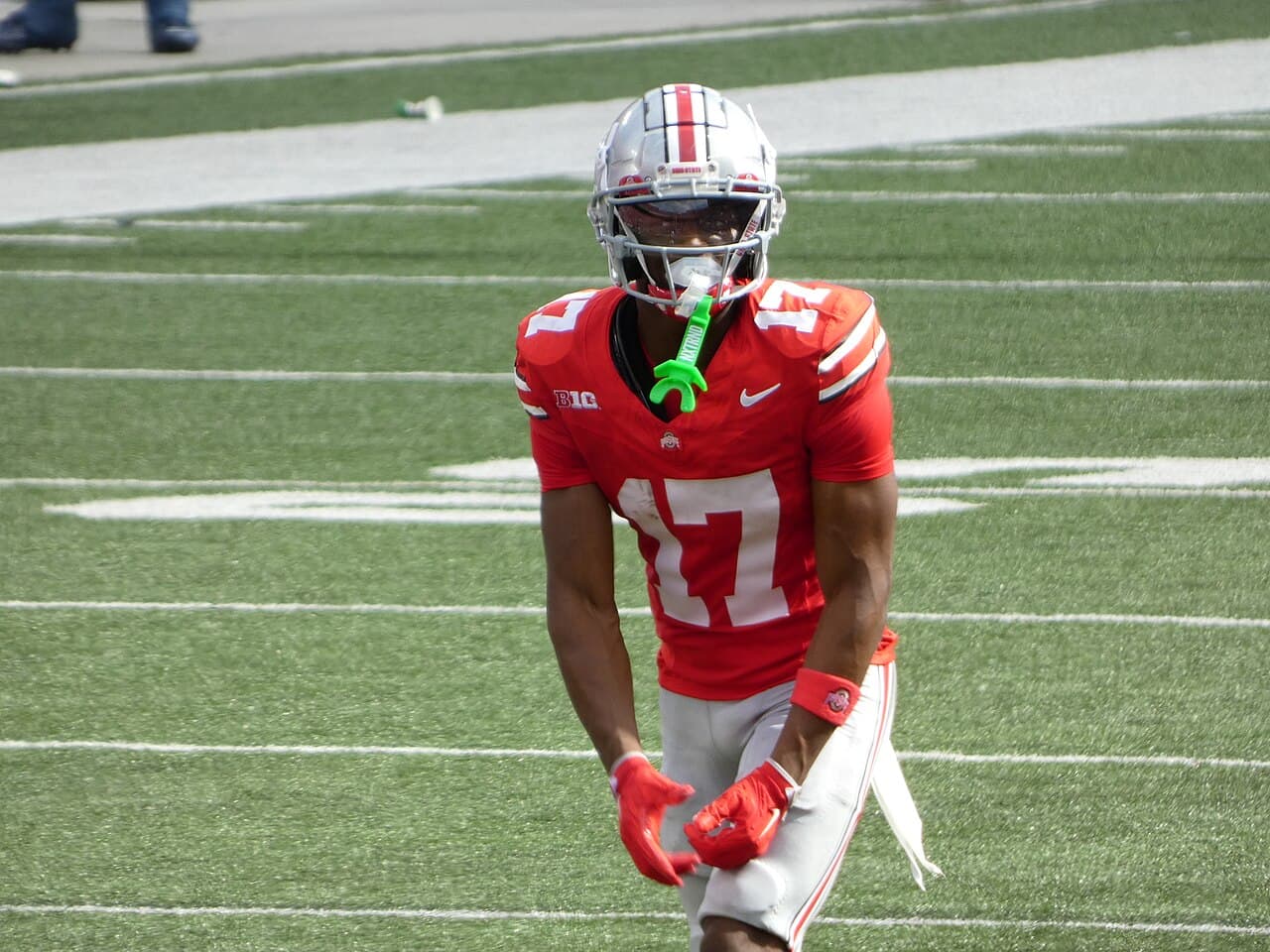
Tennessee Titans rookie wide receiver Carnell Tate was absent from Wednesday's practice, and head coach Robert Saleh told reporters afterward that Tate was held out because of stiffness rather than lingering effects from the collision he took earlier in the week. Saleh indicated the hope was that Tate would be available for Friday's joint practice with Seattle.
The collision in question came Monday, when Tate took a hard hit from safety Kevin Winston Jr. and left practice with dizziness. Saleh said at the time that Tate was shaken up but that the team did not believe he had suffered a concussion.
Taken alone, a rookie missing one August practice with stiffness is a non-event. Taken in the context of Tennessee's camp, it is the kind of thing that makes a fantasy manager check the depth chart twice.
Why this room has no margin
Tate was the fourth overall pick in the 2026 draft, and the Titans did not select him to develop slowly. Tennessee's offense is built around second-year quarterback Cam Ward, and the organizational plan has been to surround him with enough perimeter talent that his development is not held back by his supporting cast.
That plan already took damage this month. The Titans lost two players for the season in a single preseason game, and the roster does not have the depth to absorb attrition at the skill positions. Calvin Ridley is the veteran anchor of the receiver group and the player Tate has reportedly leaned on while learning a new offense, but behind those two the room drops off sharply.
That structure is why a minor absence carries more weight here than it would in Cincinnati or Philadelphia. When the depth chart is two deep, the second and third names on it are load-bearing.
What it means for Tate's rookie season
The most valuable thing a rookie receiver can accumulate in August is not highlight plays. It is reps with the starting quarterback in the actual offense, in the actual route concepts, against a defense that is game-planning. Every practice missed is a rep that goes to somebody else, and the receivers who convert early rookie-year opportunity into production are almost always the ones who took the August reps.
Tate has taken plenty of them. He was reported as one of Ward's most-targeted options in the early portion of camp, which is the meaningful part of this story. One missed Wednesday does not undo that. Missing Friday's joint practice with Seattle would matter more, because joint practices are the closest thing to live football a rookie gets before the season.
For fantasy purposes, Tate remains what he was: a rookie receiver in a fringe offense with a clear path to volume and a quarterback still finding his footing. That is a profile with a wide range of outcomes and a modest median, which is exactly how he should be priced.
The Calvin Ridley read
Ridley is the more actionable name this week. If Tate's availability wobbles into the season opener, Ridley's target share climbs, and he is already the most experienced receiver on a roster with limited alternatives. Veterans in this position are consistently underdrafted, because the market drafts the rookie's upside and ignores the veteran who will actually lead the team in targets in September.
The countervailing factor is Tennessee's offensive environment. This is not a team that is projected to play from behind constantly against soft coverage, nor one expected to support two high-volume receivers. Ridley is a bench-with-upside piece rather than a weekly starter, and he becomes a flex play in the weeks where the matchup and the game script cooperate.
The Verdexed model take
Our rookie receiver projections weight three factors more heavily than draft capital: first-team practice reps through August, target share within the first four regular season games, and the quality of the competition for targets already on the roster. Draft capital is a good proxy for opportunity, but it is only a proxy, and every year the first-round receiver who loses August reps underperforms his draft-day price.
Tate currently grades well on the first factor and extremely well on the third, because there is almost nobody in front of him. That combination is why the model has him ahead of several rookie receivers drafted after him despite Tennessee's weak projected offensive output. Opportunity beats environment for rookies more often than the consensus assumes.
The risk the model flags is durability rather than talent. A receiver who has been shaken up once and held out once inside a single week is not injured, but he is trending in a direction worth tracking, and hamstrings and soft tissue problems in August have been the dominant story of this NFL camp cycle across the league.
On the betting side, Tennessee's season-long markets are not moving on this. The number that will move, and the one worth watching, is Tate's receiving yardage prop for Week 1 once it posts. Props for rookies are among the softest markets in football, because the books have no player-level history to anchor to and the public bets the name. If Tate misses Friday's joint practice, that prop should open lower than it otherwise would, and it will be worth a look.
What to do in your league
Do not move Tate in your rankings on a Wednesday absence with a stiffness designation. Do add Ridley to your late-round list if he is not already there, because his floor rises with every day Tate is not on the field.
Track Friday. A full joint practice against Seattle closes this story. A second consecutive absence turns it into a September question, and rookie receivers who enter Week 1 short on August work rarely produce in the first month.