 NFL2026-08-26
Caleb Douglas Opened Camp as a Rookie and Closed It Atop the Dolphins Depth Chart
By Verdexed Fantasy Desk
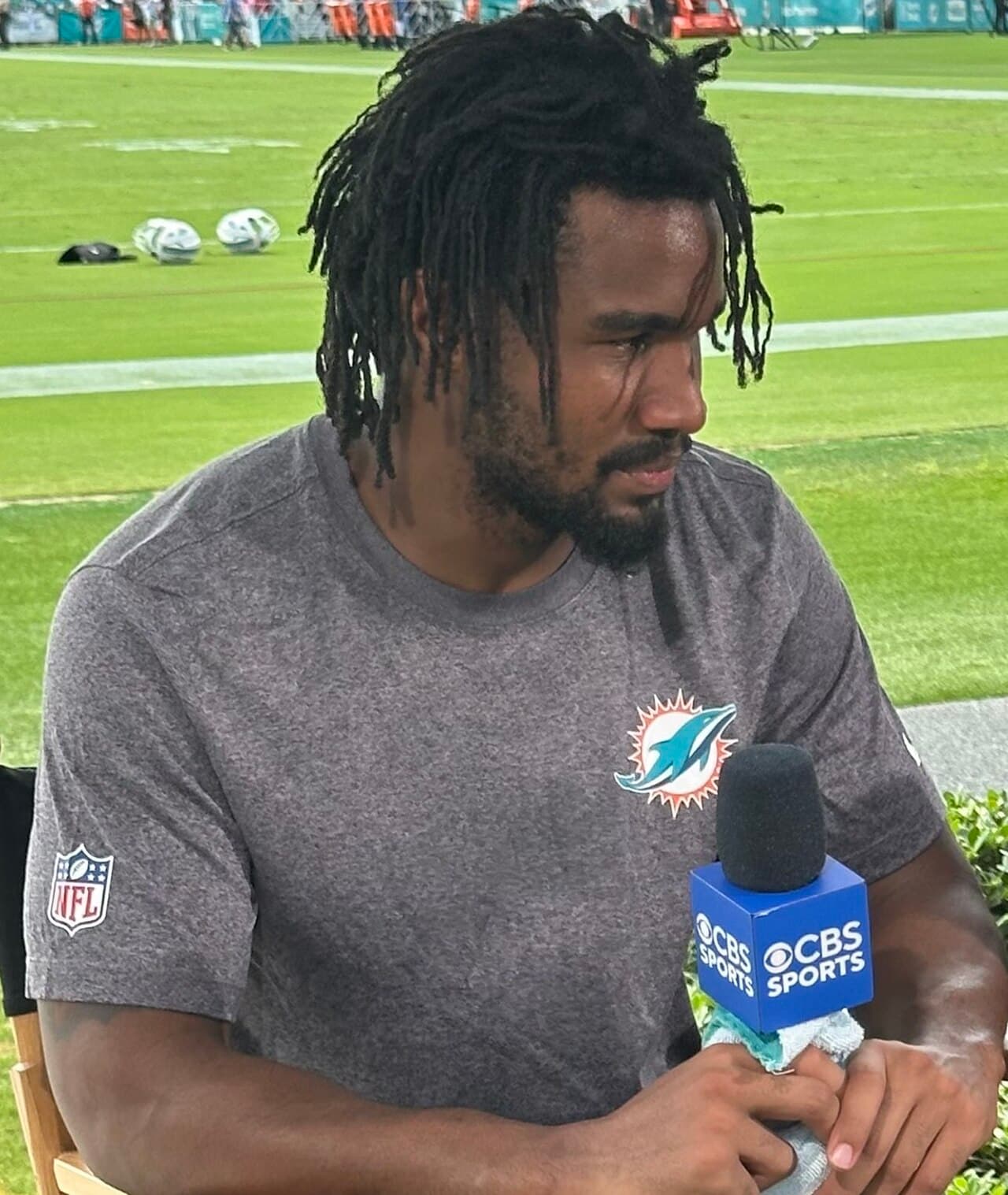
Miami Dolphins rookie wide receiver Caleb Douglas was listed as a starting wideout on the team's preseason depth chart, the culmination of a training camp in which he separated himself as the most reliable target in a receiver room that had very little settled about it. Reporting out of Miami has described Douglas as the most dependable option for quarterback Malik Willis over the past several weeks.
Depth chart placement in August is not a promise. It is, however, the clearest public signal a team gives about who it trusts, and Miami is a team that needed someone to trust.
Why the job was available
The Dolphins entered this offseason with a receiver group that was thin at the top and unproven underneath. That is the context for a rookie climbing to the first team: he did not beat out an established starter so much as fill a vacancy that the veterans on the roster failed to claim.
Miami also brought in a veteran on a low-cost deal earlier in the offseason who, per reporting around the roster, has been leapfrogged by rookies after a quiet camp and a modest preseason. When a team's veteran addition gets passed by first-year players, that tells you more about the depth chart than any single practice report does.
Douglas's physical profile is part of why he was able to take it. At a listed 6-foot-4 and roughly 205 pounds, he gives Miami a size element the rest of the room lacks, and reporting out of camp has credited him as a polished route runner with real deep speed. That combination, size on the boundary plus the ability to threaten vertically, is the profile that survives a transition to NFL coverage better than most.
The honest caveats
Preseason depth charts are drawn by position coaches and revised weekly. Rookie receivers historically produce a wide range of outcomes, and the ones who start Week 1 are not reliably the ones who produce by Week 8.
The quarterback situation is the larger question. A receiver's fantasy value is a function of the passing offense he plays in, and Miami's projected passing volume and efficiency are the inputs that will decide whether Douglas is a viable weekly starter or a name you stream in bye weeks.
He also has not faced a defensive game plan built to take him away. Camp separation against a familiar secondary and preseason production against backups are real data, but they are the least predictive data the season produces.
Fantasy fallout
Douglas belongs at the back end of your draft board in every format, and higher than that in best ball. The case is not that he is good, it is that he is cheap and the role is real. Late-round receivers who are already starters carry a structurally better outcome distribution than late-round receivers who need an injury to play.
In dynasty leagues the case is stronger. A rookie who wins a starting job in August on a team with no entrenched alternative is exactly the profile that appreciates fastest, and his acquisition cost right now is a late rookie pick or a waiver claim.
The rest of the Miami receiver room loses value in proportion to what Douglas gains. Anyone being drafted as the Dolphins' projected top receiver on the basis of last season's depth chart needs to be repriced down.
The Verdexed model take
Verdexed's rookie receiver model weights three inputs above all others: projected route participation, the quality of the competition for targets, and the passing volume of the offense. Douglas scores well on the first two and poorly on the third, and that combination produces exactly the profile the model flags as a high-variance late-round asset rather than a sleeper to reach for.
The model's read is that his projected target share is legitimately top-two on his own team, and that the ceiling on his fantasy output is nonetheless constrained by how often Miami will be throwing. Those two facts are not in tension. A large slice of a small pie is still a small number.
That is the useful framing for draft day. Douglas is a player you take at his cost, not above it, and the outcome that makes him a league-winner requires Miami's passing game to be better than the market currently projects.
The betting angle
Rookie receiving props are the softest market in football in September, because books have no in-season baseline and must set numbers off camp reporting and draft position. Douglas will open with modest receptions and yardage lines.
The lean is to the over on receptions rather than yards. Volume-driven rookies who play a full snap share tend to accumulate catches before they accumulate explosive plays, and the reception market is where the gap between projected role and posted number is usually widest.
Miami's team total is a separate question and not one this news answers.
What to do in your league
Draft him in the last two rounds. Do not spend a mid-round pick chasing the camp hype, and do not leave him undrafted in leagues deeper than ten teams.
If your league has already drafted, he is a waiver add in most formats, and specifically the kind of add you make before Week 1 rather than after, because the price after a productive opener is a top waiver claim rather than a free roster spot.
What's next
Two checkpoints matter. First, whether Douglas survives the cutdown week atop the depth chart, because final 53-man decisions sometimes come with roster additions that reshuffle a receiver room. Second, his Week 1 snap share. A rookie receiver playing a high percentage of offensive snaps in his first game is a fantasy asset regardless of the box score. A rookie rotating in and out is a stash.