The Browns Are Splitting Preseason Starts Between Deshaun Watson and Shedeur Sanders as Dillon Gabriel Closes
By Verdexed NFL Desk
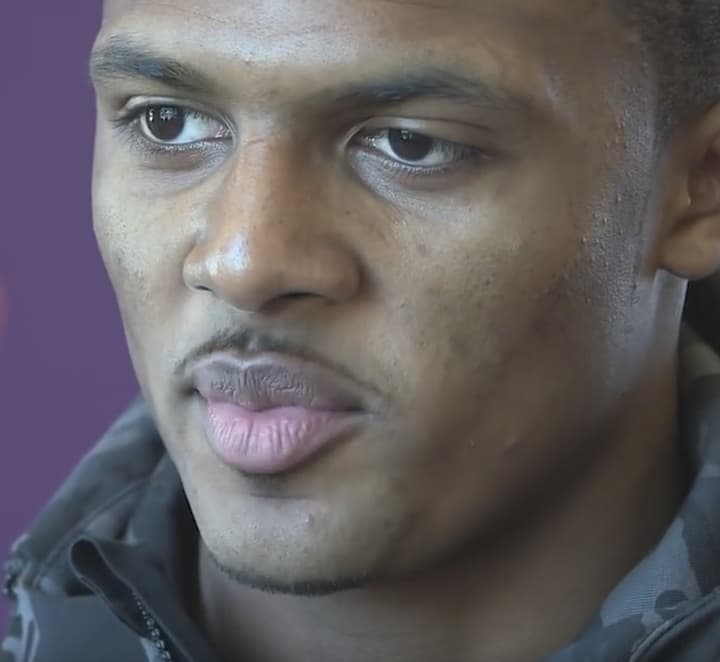
Cleveland heads into its preseason opener at Chicago on Saturday without a named starting quarterback, and head coach Todd Monken has structured the exhibition schedule to keep it that way for at least two more weeks. Per multiple reports out of Berea, Deshaun Watson and Shedeur Sanders will split the first two preseason starts, with one taking Saturday's game and the other starting the second exhibition against Buffalo. Dillon Gabriel, who entered camp as an afterthought in the conversation, has been earning extra reps and is now genuinely in it.
Monken and general manager Andrew Berry have both framed the decision the same way: production decides it. That is a coaching staff refusing to pre-commit, which is the honest position given what the roster looks like.
Where the reps have gone
The most consistent reporting through camp has Watson taking the bulk of first-team snaps in competitive eleven-on-eleven and seven-on-seven periods, with Sanders splitting second-team work alongside Gabriel. That is a meaningful signal, but it is not a decision. Veterans get first-team reps in July by default in most camps, and the split has narrowed as the preseason approached.
Gabriel is the development worth tracking. Monken has confirmed publicly that Gabriel has earned additional reps, and the staff has expanded his workload as camp progressed. A third quarterback closing ground in August usually means one of two things: he is genuinely playing well, or the two ahead of him are not separating. In Cleveland's case, both explanations have support.
The important thing for anyone handicapping this is that Cleveland is not choosing between a proven starter and a developmental project. It is choosing among three quarterbacks with real questions, and the coaching staff has said out loud that on-field production in games will settle it.
The fantasy read is about the pass catchers, not the quarterback
No Cleveland quarterback belongs on a fantasy roster in a one-quarterback league regardless of who wins. The relevant question is what the outcome does to the skill players.
The Browns invested heavily in the offense in the 2026 draft, including a second-round pick on receiver Denzel Boston at No. 39 overall, and the expectation in camp has been that Boston plays a substantial role. A rookie receiver's fantasy value is highly sensitive to quarterback quality, and the range of outcomes here is unusually wide. Boston with a stable, accurate starter is a viable WR4 with upside. Boston in an offense that cycles through three quarterbacks by October is nearly unrosterable.
That is the actual fantasy decision. The quarterback battle is a proxy for whether any Cleveland pass catcher is draftable.
The Verdexed model take
The model does not project a large difference in team-level output across the three candidates, which is itself the finding. The gap between Cleveland's best-case and worst-case quarterback outcome is smaller than the gap for most teams with an open competition, because the supporting cast and the projected defense do most of the work in the team projection.
Where the model does separate them is variance. A Watson-led offense carries the widest distribution, given his availability history and the length of time since he played at a starting level. Sanders carries a lower ceiling and a lower floor typical of a young quarterback in a first extended run. Gabriel is the narrowest distribution of the three, which is an underrated argument for him in a season where Cleveland's realistic goal is competence rather than contention.
For betting, the model's position on Cleveland's win total is that the number is priced correctly for a team with a functional defense and an unresolved quarterback room, and the value is in game-level rather than season-level markets. Specifically, Cleveland unders in early-season games look more attractive than the season win total, because a rotating quarterback situation suppresses scoring in ways that season-long numbers already partially account for.
What to do in your league
Do not draft a Cleveland quarterback. In superflex, Watson is a last-resort QB3 and only because of the possibility that he holds the job all season.
Boston is the name to have an opinion on. If he is available in the last three rounds, he is worth a pick on the chance that the quarterback situation stabilizes and he becomes the target leader on a team that will trail often and throw. If he costs more than that, pass.
The broader roster-construction point applies to every ambiguous quarterback room: do not draft the skill players from an offense with three candidates until you know which one is playing. There will be a clearer price in two weeks, and the information is free.
What's next
Saturday at Chicago is the first live evidence, and the second preseason game against Buffalo is where the other of Watson and Sanders gets his start. Monken has given no timeline for naming a Week 1 starter, but teams that intend to start a veteran usually announce well before the final cut date, and teams that are still deciding usually wait. Cleveland waiting is itself information.
Watch Gabriel's snap count more than the box scores. If he takes meaningful second-half reps in both preseason games while the other two split the starts, the staff is keeping a third option alive on purpose, and that tells you how confident it is in the first two.
The betting angle nobody is pricing
Preseason quarterback rotations create one of the few genuinely exploitable inefficiencies in August markets. Books set preseason sides and totals with limited information about how long starters will play, and a team openly splitting starts between two quarterbacks is a team whose first-half scoring is harder to model than usual.
Cleveland is the clearest example on this weekend's slate. A quarterback making a competitive audition start typically gets a longer look than a settled starter would, which pushes more first-team snaps into the first half than a standard preseason script produces. That is a small edge on first-half totals in both Browns exhibitions, and it disappears the moment Monken names a starter.
The season-long market is a different question. Cleveland's win total assumes a functional defense and roughly replacement-level quarterback play, which is a fair description of the range of outcomes here. There is no edge in the number itself. The edge, if there is one, is in early-season game totals, where a quarterback situation that is still being sorted in September suppresses scoring more than the market typically accounts for.