Browns QB Competition: Deshaun Watson Leads, but the Fantasy Picture Stays Murky
By Verdexed NFL Desk
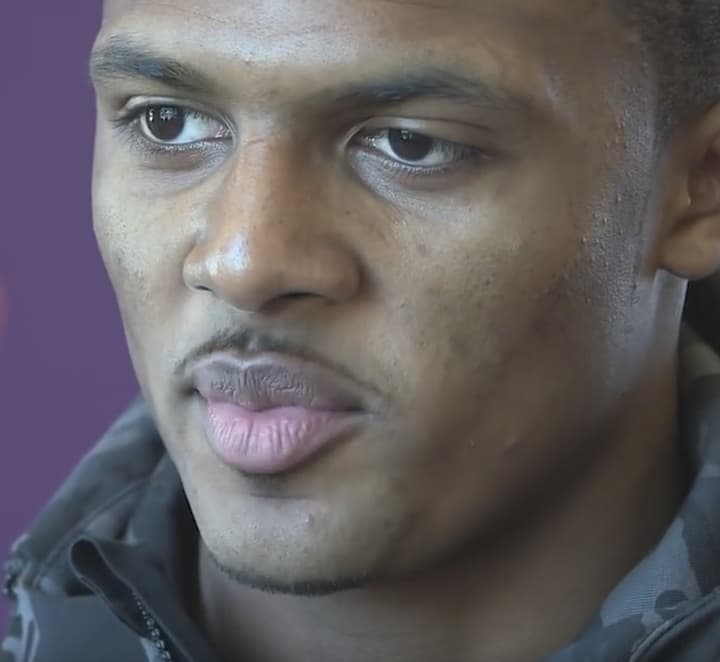
Cleveland's quarterback competition is starting to take shape, and the early winner is a name few fantasy managers wanted to bet on. Deshaun Watson has reportedly emerged from the Browns' offseason program as the frontrunner to win the starting job over Shedeur Sanders and Dillon Gabriel, with reporting indicating he was up first in nearly every session and hit it off with new head coach Todd Monken. Watson is also the betting favorite to be named Cleveland's Week 1 starter. For fantasy purposes, the takeaway is less about who wins and more about how murky the situation remains.
Monken has signaled he wants a starter named before training camp, so this competition should resolve in weeks rather than dragging deep into the summer. That clarity helps fantasy managers plan, but it does not erase the underlying problem: none of the three options offers the kind of stable, high-volume passing profile that makes Cleveland's skill players easy to trust on draft day.
Where the competition stands
Watson and Sanders have been splitting the first-team reps in team drills, with Gabriel widely viewed as the third option after Sanders passed him on the depth chart during the previous season. The framing from inside the building is that this is a genuine competition centered on the two veterans of the group, with Watson holding the early edge on reps and rapport with the new staff.
The Sanders angle is the one fantasy managers will keep watching. A second-year leap is the kind of development that could swing the entire offense's outlook, and if Sanders seizes the job in camp, the calculus on Cleveland's pass catchers changes. For now, though, the reporting points to Watson, and the smart approach is to plan around the frontrunner while staying flexible.
The fantasy fallout
The practical problem is that a three-way quarterback competition suppresses the draftable value of everyone downstream. Cleveland's receivers and tight ends become a guessing game: managers are not just projecting talent and target share, they are projecting which quarterback throws those targets and how well. That uncertainty is exactly what pushes a pass catcher down draft boards even when the underlying ability is there.
The one back-end profile that survives the chaos is the running game. A muddy quarterback room often means a run-leaning game plan, which is part of why second-year back Quinshon Judkins profiles as a breakout candidate if he locks down early-down work. In an offense without a settled passer, the back who controls the early-down and goal-line touches is frequently the safest fantasy asset on the roster.
As for the quarterbacks themselves, none belongs in a single-quarterback league as more than a late-round dart or a wait-and-see name. Watson as the projected starter carries rushing upside that has historically lifted his fantasy floor, but the bar for trusting him as a weekly starter is high given the layoff and the competition. Sanders is the speculative stash with the most long-term upside if he wins the job. Gabriel is a deep-dynasty hold rather than a redraft consideration.
Why a settled starter changes everything
The reason fantasy managers should care about the resolution date is that quarterback clarity is the single biggest input into a pass catcher's projectability. A receiver attached to a known starter with a defined role can be drafted with confidence; the same receiver attached to an unsettled three-way competition has a range of outcomes too wide to trust. Until Cleveland names its starter, every projection for its skill players carries an asterisk, and that uncertainty is what drags their draft value down regardless of talent.
The flip side is opportunity. Because the market discounts the entire offense during the uncertainty, the player who emerges as the clear beneficiary once the starter is named can become a value if managers are slow to adjust. The receiver who earns the trust of whichever quarterback wins, or the pass catcher whose role crystallizes in camp, is exactly the kind of post-resolution riser worth monitoring. The chaos that suppresses value now can create a bargain later for the manager paying attention.
The betting angle
The quarterback market is the cleanest read here: Watson sitting as the Week 1 favorite tells you where the building is leaning, and any in-camp movement on those odds will be the earliest signal of a change at the top. From a team perspective, an unsettled quarterback room tends to depress passing-volume expectations and nudge game scripts toward the run, which matters for Cleveland's team totals and for the over-under on the offense's pass attempts.
The Verdexed model take
Verdexed's projections treat the Browns' passing game as one of the lowest-confidence situations in the league, with wide ranges of outcomes for every pass catcher until the starter is settled. The model leans into Judkins as the most projectable piece of the offense, valuing the likely run-leaning script, and it discounts the receivers and tight ends relative to their talent because of the quarterback uncertainty.
The model's read on the quarterbacks mirrors the betting market: Watson as the probable starter with rushing-driven upside but a low floor, Sanders as the highest-variance option, and Gabriel as a non-factor for redraft. None of the three clears the bar as a confident weekly starter at this stage.
What to do in your league
Do not draft the Browns' passing game expecting clarity. Treat Judkins as the safe Cleveland investment, monitor the camp competition closely for any sign Sanders is overtaking Watson, and avoid paying up for a Browns receiver until you know who is throwing the ball. The starter should be named before camp ends, so patience costs you little: let the competition resolve, then pounce on whichever skill player gains value once the quarterback picture clears.