 NFL2026-07-14
Baker Mayfield Sets a Training Camp Deadline: The Buccaneers Contract Standoff and the Fantasy QB Angle
By Verdexed NFL Desk
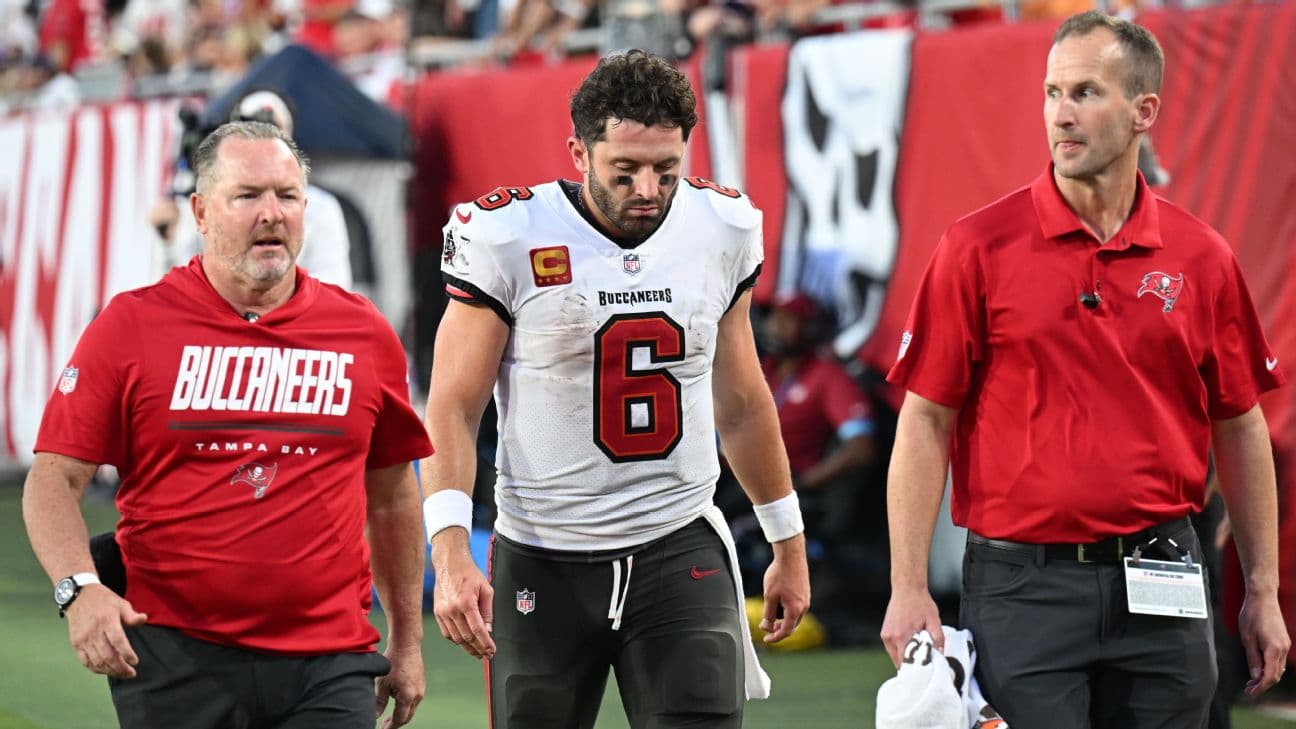
Baker Mayfield has drawn a line in the sand. The Buccaneers quarterback has publicly set a deadline for a new contract: get a long-term extension done before training camp opens July 28, or the negotiation goes on hold and he plays out the 2026 season on his current deal. With the two sides reportedly not close, the standoff is one of the last major contract stories of the NFL offseason, and it carries a fantasy angle worth reading before draft season kicks into gear.
The state of the negotiation
Mayfield is entering the final year of the three-year deal he signed in March 2024, a contract that pays him a substantial salary in 2026 but sits well below the top of the quarterback market. His camp's position reflects how far that market has moved. Reports indicate agents around the league peg the baseline for a quarterback of his caliber near the $50 million-per-year range on the early years of a new deal, while as of late June the sides were described as not anywhere close to a number.
Mayfield has been consistent about the framing. He has said he would love to stay and get a long-term deal done, but that once camp starts, contract talk stops. That is a common veteran tactic: set a hard cutoff to force urgency, then remove the distraction and focus on football. The likeliest outcome if no deal is reached is straightforward. Mayfield plays 2026 on his current contract, and the sides revisit talks next offseason.
Why this is not a holdout worry
Unlike some of the offseason's other contract dramas, this one carries little risk of Mayfield actually missing time. He has framed the deadline as the end of negotiations, not the start of an absence, and every signal points to him reporting and playing. That distinction matters for fantasy managers who might otherwise see a contract standoff and worry about availability. There is no indication Mayfield skips camp or games.
The subtext is that both sides have incentive to keep this professional. Tampa Bay wants its quarterback locked in for the long term, and Mayfield wants the security. Even if the deadline passes without a deal, a productive 2026 only strengthens his leverage next spring. A contract year for a quarterback who has already proven himself in the system is not a fantasy red flag. If anything, it is motivation.
Fantasy fallout: a stable QB1 with a contract-year edge
Mayfield's fantasy value is built on volume, aggressiveness, and the mobility to add rushing production, a profile that has kept him in the streaming-plus tier of fantasy quarterbacks. The contract situation does nothing to erode that. He returns to a familiar offense with his top pass catchers, and a contract year historically pushes quarterbacks to lean into the aggressive, high-attempt style that fantasy rewards.
The draft-day read is that Mayfield remains a strong value at his cost. Managers who prefer to wait on quarterback can target him as a back-end QB1 or high-end QB2 with weekly upside, exactly the kind of pick that lets you spend early capital on running backs and receivers. His pass catchers also hold their value; a settled, motivated Mayfield is good news for the fantasy stock of everyone catching his throws.
The rushing floor that raises his ceiling
What separates Mayfield from the replacement-level streaming quarterbacks is the scrambling and short-yardage mobility that adds rushing production to his passing volume. Rushing points are the great equalizer in fantasy quarterback scoring, providing a floor that pure pocket passers cannot match. Even in a bad passing week, a quarterback who picks up chunk runs and sneaks in goal-line yardage keeps his fantasy line respectable. That element is part of why Mayfield has graded above his reputation in fantasy formats.
A contract year tends to sharpen exactly that aggressive, all-in style. Quarterbacks playing for their next deal take the extra risks, extend more plays, and lean into the tempo that generates fantasy points. None of that requires a signed extension to materialize. If anything, an unresolved negotiation gives Mayfield more incentive to produce, which is the opposite of the availability worry the headline might imply for the uninitiated.
The Verdexed model take
Verdexed's quarterback model keys on projected pass volume, aggressiveness, and supporting cast rather than contract status, and on those inputs Mayfield grades as a stable QB1-caliber fantasy option. The model sees no availability risk in the standoff and treats the contract-year dynamic as a mild positive for attempt volume, the single biggest driver of fantasy quarterback scoring.
The broader signal is that the market's expectation of a resolution, whether now or next offseason, keeps Tampa Bay's offensive outlook steady. For fantasy purposes, a steady offense with a proven quarterback and intact weapons is the ideal backdrop for a late-round quarterback strategy. The model's rest-of-season projection for Mayfield is essentially unchanged by the negotiation, which is precisely why he profiles as a value rather than a risk.
What to do in your draft
Do not overthink the headline. Draft Mayfield as a set-and-forget back-end QB1 or the QB you pair in a streaming build, and take his top receiver with confidence at his current cost. If the deal gets done before camp, nothing about the fantasy calculus changes. If it does not, a motivated quarterback in a contract year is a profile that has produced fantasy points for years.
What's next
The clock runs to July 28. Either the Buccaneers meet Mayfield near the top of the market and lock him in, or the two sides table it and run it back in 2026 with the same conversation waiting next spring. For fantasy managers, the practical takeaway is simpler than the negotiation: Mayfield is playing, the offense is intact, and the contract noise is a draft-season discount, not a warning.