Zion Williamson's July 15 Cliff: Trade Buzz Builds Even as the Pelicans Say He Is Staying
By Verdexed NBA Desk
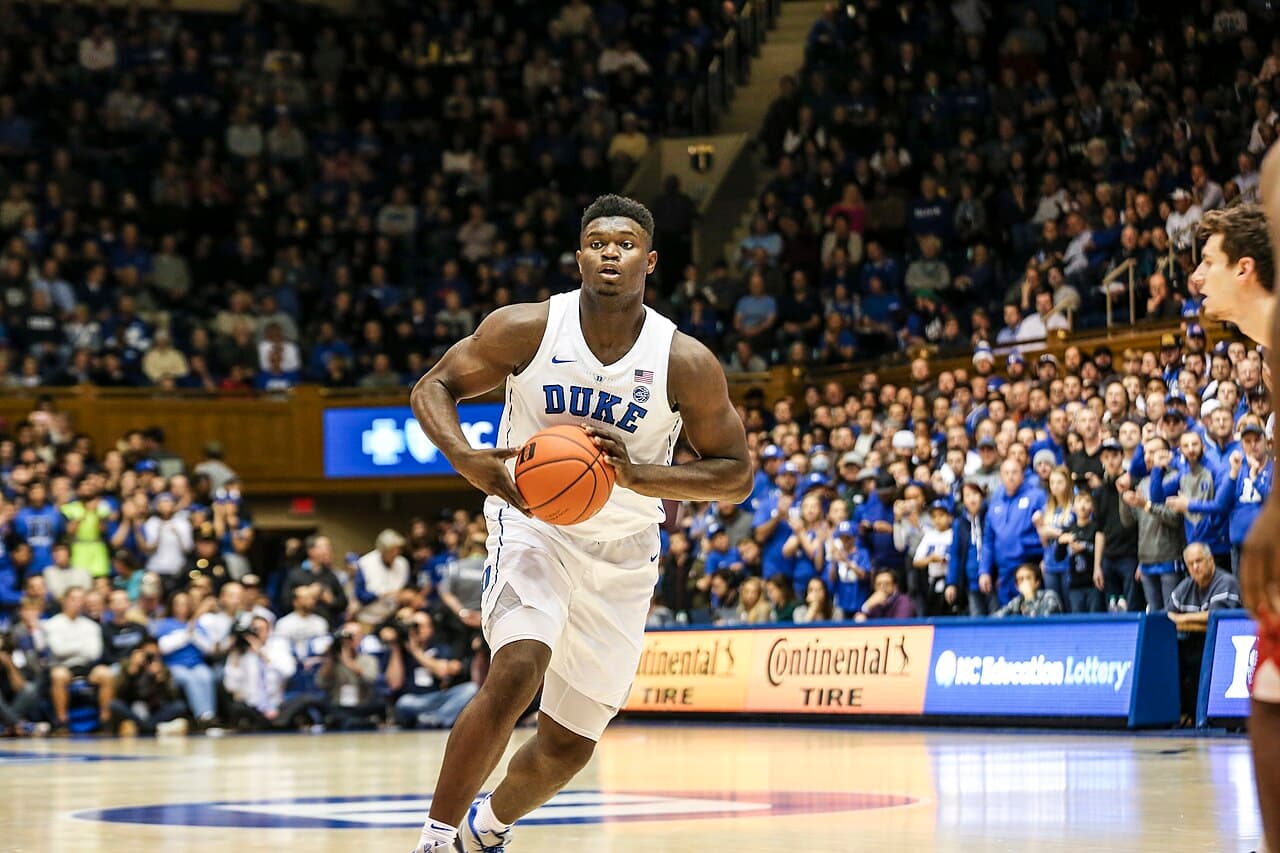
Zion Williamson is at the center of the NBA's most interesting offseason staring contest. His 2026-27 salary becomes fully guaranteed on July 15, a deadline that has fueled steady trade chatter, even as the New Orleans Pelicans have stated they have no intention of trading him this summer. That tension, a hard financial date pulling against a public commitment, makes the next month one of the more compelling situations to track for dynasty managers and bettors alike.
The financial mechanics are the engine. Williamson's salary for the upcoming season was partially guaranteed earlier in the year after he crossed a games-played threshold, and it converts to a full guarantee on July 15. Until that date, his contract carries a measure of team flexibility; after it, the Pelicans are fully committed to the figure. That structure is exactly the kind of thing that concentrates trade speculation into a narrow window, because any team weighing a deal has a clear deadline to act before the money locks in.
The Pelicans' stated position
New Orleans has been clear in public. The front office has said it does not intend to move Williamson this summer, a stance that directly counters the external buzz. That is the most important fact in the story: the only on-record position from the team is that he stays. Everything else is speculation, much of it generated by analysts and trade-idea pieces rather than reporting of active negotiations or mutual interest with another club.
That distinction matters for how seriously to take the chatter. There is a difference between a hard deadline that theoretically invites action and actual reported momentum toward a deal. As of now, the situation is the former: a date on the calendar and a team saying it is keeping its player.
The fit-and-timeline backdrop
The reason the speculation persists is roster construction. The Pelicans missed the playoffs again, and there is a plausible argument that the franchise's young core is on a different timeline than Williamson, whose availability has been a recurring question throughout his career. When a star's timeline and health profile do not neatly align with a rebuilding youth movement, outside observers naturally float trade scenarios. Several teams with cap space or assets have been mentioned as hypothetical fits, but those are analyst constructions, not insider-reported pursuits.
Williamson's on-court production, when available, remains strong, with a scoring-and-playmaking line that any team would value. The perennial caveat is health and games played, which is the single biggest factor in both his trade value and his fantasy value.
Fantasy and dynasty fallout
For dynasty managers, Williamson is the definition of a high-variance asset whose value swings hard on two axes: health and destination. A move to a team that pairs him with a creator and lifts his offensive environment would raise his ceiling; a stay in New Orleans keeps him as the focal point but on a team still figuring out its direction. Either way, the floor risk is availability, not talent.
The actionable read is to hold and monitor. Do not sell low on the trade noise alone, because the only firm fact is that the Pelicans say he is staying. Do not buy aggressively expecting a move that may not come. The July 15 date is the marker: if it passes with Williamson still in New Orleans, the guarantee locks in and the immediate speculation should quiet down.
The betting angle
The July 15 guarantee date gives bettors a clean peg. Any market on whether Williamson is traded before a given date keys off that deadline, and the Pelicans' on-record stance argues for skepticism toward an imminent move. Landing-spot markets, where they exist, should be treated cautiously given that the named suitors come largely from speculative pieces rather than reported interest. The value play leans toward the status quo holding through July 15 absent concrete reporting of a deal.
Why availability is the whole story
Every angle on Williamson eventually circles back to one question: how many games will he play? His talent is not in dispute; when he is on the floor, he is one of the most efficient interior scorers in the league and a genuine offensive engine. But the games-played history is the reason both his trade market and his fantasy value carry a permanent discount. A team trading for him is betting on availability, and a fantasy manager drafting him is making the same bet. That is why the July 15 guarantee is such a flashpoint, because it forces every interested party to price the health risk at a specific moment.
For dynasty managers, this means Williamson should be valued as a swing asset rather than a safe cornerstone. The ceiling, a healthy season in a good situation, is among the highest at his position. The floor, another injury-shortened campaign, is the recurring reality that has defined his career. Building around him requires depth and contingency planning, which is the prudent way to roster any high-upside player whose availability cannot be counted on.
The Verdexed model take
Verdexed's model frames Williamson as a talent whose projected value is dominated by an availability discount. The model treats the trade probability as lower than the volume of chatter implies, weighting the team's public stance and the absence of reported negotiations. On the fantasy side, it projects elite per-game production gated by a games-played risk that caps his reliable value regardless of uniform. Net read: hold him as a high-upside, high-risk asset, expect the Pelicans' position to hold through the guarantee date unless real reporting emerges, and treat any landing-spot speculation as noise until an insider confirms mutual interest.
What's next
July 15 is the date that matters. If it passes with Williamson in New Orleans, the salary fully guarantees and the summer speculation should fade. If concrete reporting of a deal emerges before then, the calculus changes fast for both fantasy and betting markets. Until one of those happens, the honest read is a team saying it is keeping its star against a backdrop of outside noise. For dynasty managers, hold and watch the date; for bettors, lean toward the status quo until the reporting says otherwise.