Week 2 Market Report: The 49ers Number Climbed to 13.5 While Kansas City Drifted Down to 6.5
By Verdexed Analytics
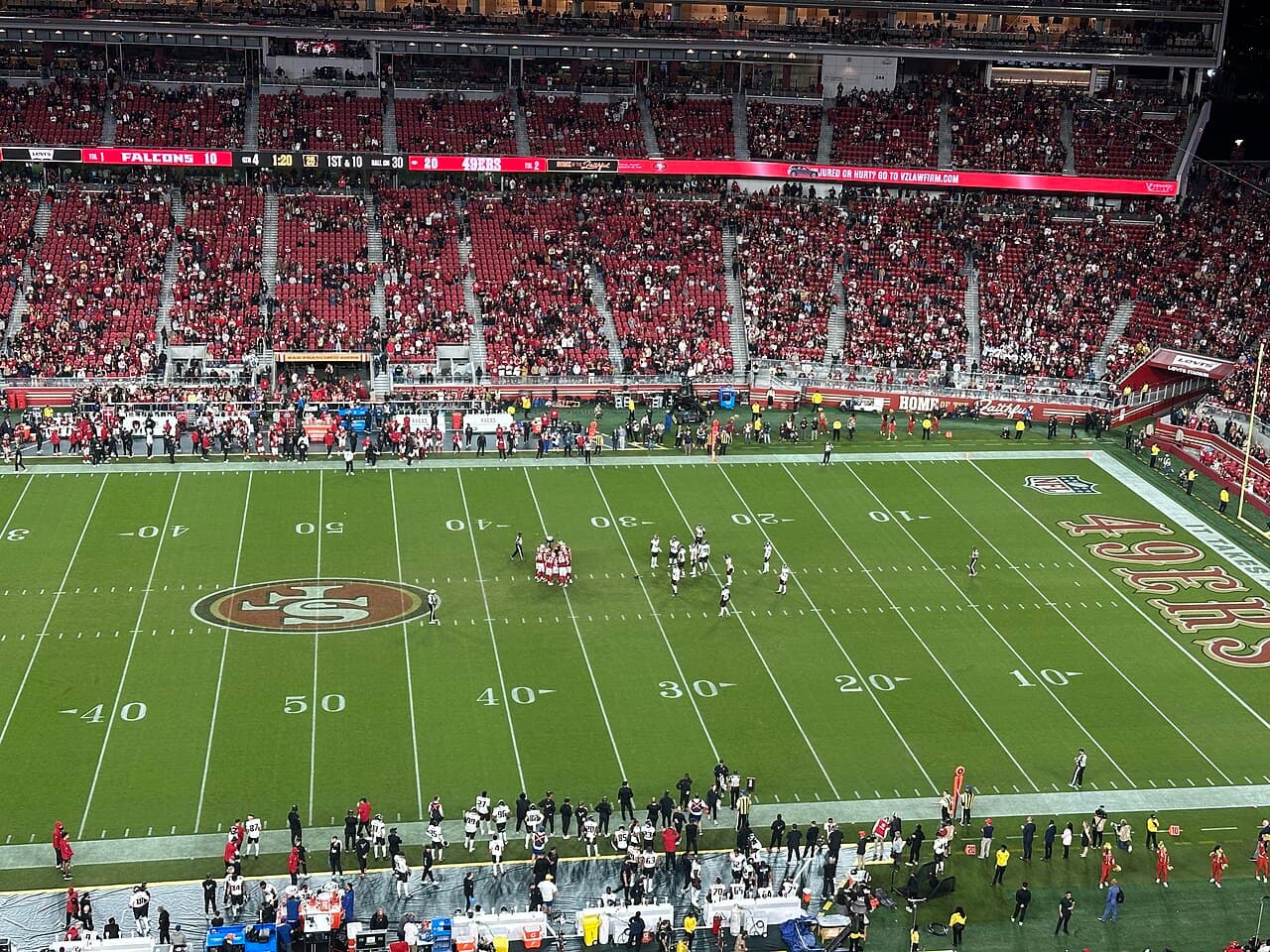
The Week 2 board closed with two moves worth paying attention to. San Francisco's number against Miami climbed to roughly 13.5 points, the largest spread of the young season, while Kansas City's Sunday night line against Indianapolis drifted from a touchdown down to about 6.5. Those two moves went in opposite directions and were driven by different forces, which is what makes the week's market read useful rather than noisy.
Line movement is the cheapest information available to a bettor or a fantasy manager. It aggregates injury reports, weather, sharp money and public sentiment into a single number, and when it disagrees with the news cycle that disagreement is usually the story.
San Francisco climbed through a key number
The 49ers opened the week priced in the 12 to 12.5 range and closed near 13.5. Movement of a full point through the 13 threshold on a double-digit favorite is not casual. Numbers above 10 are less sensitive than numbers around 3 and 7, so a move of that size signals real money rather than line shading.
The mechanism is not mysterious. San Francisco is at home, Miami has been the worse team through one week, and the 49ers own the highest implied team total on the slate. What makes the number notable is that San Francisco is doing this without Christian McCaffrey, who is on injured reserve. A market that pushes a favorite up through 13 while its best skill player sits is a market that believes the supporting cast is sufficient.
The practical implication for DFS is that San Francisco's implied total makes its pass catchers and its replacement backfield the highest-projected skill group of the week. The practical implication for betting is that a 13.5-point home favorite has to win by two scores to cover, and Week 2 blowouts are harder to hit than Week 2 blowout projections suggest.
Kansas City moved the other way
The Chiefs opened near a touchdown for Sunday night against Indianapolis and closed closer to 6.5. A move from 7 down through the key number is a bigger deal than the half point suggests, because 7 is the second-most-common NFL margin. Buying a game down off the number materially changes the distribution of outcomes for a backer of the underdog.
Part of the move is respect for Indianapolis. Part of it is the standard market behavior around prime-time Kansas City games, where public money tends to inflate the opening price and sharper money fades it through the week. When a number moves against the more popular side, the money moving it is generally the money worth following.
The rest of the Sunday board
Denver sits as a home favorite of roughly 2.5 over Jacksonville with a total in the mid-40s, a short number for a team hosting an opponent that won by 24 in Week 1. The Los Angeles Chargers are home favorites of about 6.5 to 7 over Las Vegas with a total around 43.5, a number that priced in Brock Bowers being doubtful. Seattle is a road favorite of roughly 3.5 at Arizona with a total near 41, the lowest on the board, which is what happens when both teams are starting a quarterback who was not the plan in August.
Chicago's number against Minnesota settled around 4.5 after Kyler Murray was ruled out with a concussion and Carson Wentz was confirmed as the Vikings starter. That is worth flagging because the move on the Murray news was larger earlier in the week and has since come back in. Markets overreact to quarterback news and then correct, and the correction is frequently the better price.
Monday night's Rams number against the Giants fell from roughly 9.5 to about 7.5 across the week, a two-point move against a favorite whose opponent lost a starting cornerback to injured reserve. Puka Nacua's questionable tag explains part of it. The rest is the market digesting a bad Los Angeles offensive performance in Week 1.
The Verdexed model take
Verdexed's model disagrees with the market in two places on this board. It projects San Francisco's margin below the closing number, which makes Miami the model's preferred side despite the gap in team quality. Double-digit favorites in September are systematically overpriced because the market extrapolates from a single game of evidence, and the 49ers are missing the player who drove their efficiency edge.
The model agrees with the direction of the Kansas City move but not the magnitude. It projects the Chiefs' margin slightly above 6.5, which puts the model on Kansas City at the closing number rather than on Indianapolis.
On totals, the model's strongest position is the under in Seattle at Arizona. A game with a total of 41 already assumes a low-scoring affair, and the model projects lower still given the quarterback situations on both sides.
Betting angle
The structural lesson of Week 2 markets is that lines are still adjusting to one game of new information while carrying eight months of preseason priors. That tension produces the largest gaps between price and projection of any point in the season.
Favor unders in games where both teams have quarterback or receiver uncertainty, because the market prices personnel news into sides faster than it prices it into totals. Fade double-digit September favorites as a default rule, and take the points when a popular team's number has moved down through a key threshold, because that move is usually informed money.
What it means
For fantasy, the implied totals are the fastest route to a start-sit answer. San Francisco's pass catchers sit atop the slate's scoring environment. The Seattle and Arizona skill players sit at the bottom of it. Everything else falls in between, and a receiver's matchup ranking matters less than the number of points his team is projected to score.
For bettors, the two biggest moves of the week point in opposite directions and both reward the same discipline: take the side the market is moving away from when the move is driven by public sentiment, and follow the move when it is driven by money that arrives without a headline.