Sharks Trade Down for Michael Kesselring: A Quiet Move With Real Fantasy Upside
By Verdexed NHL Desk
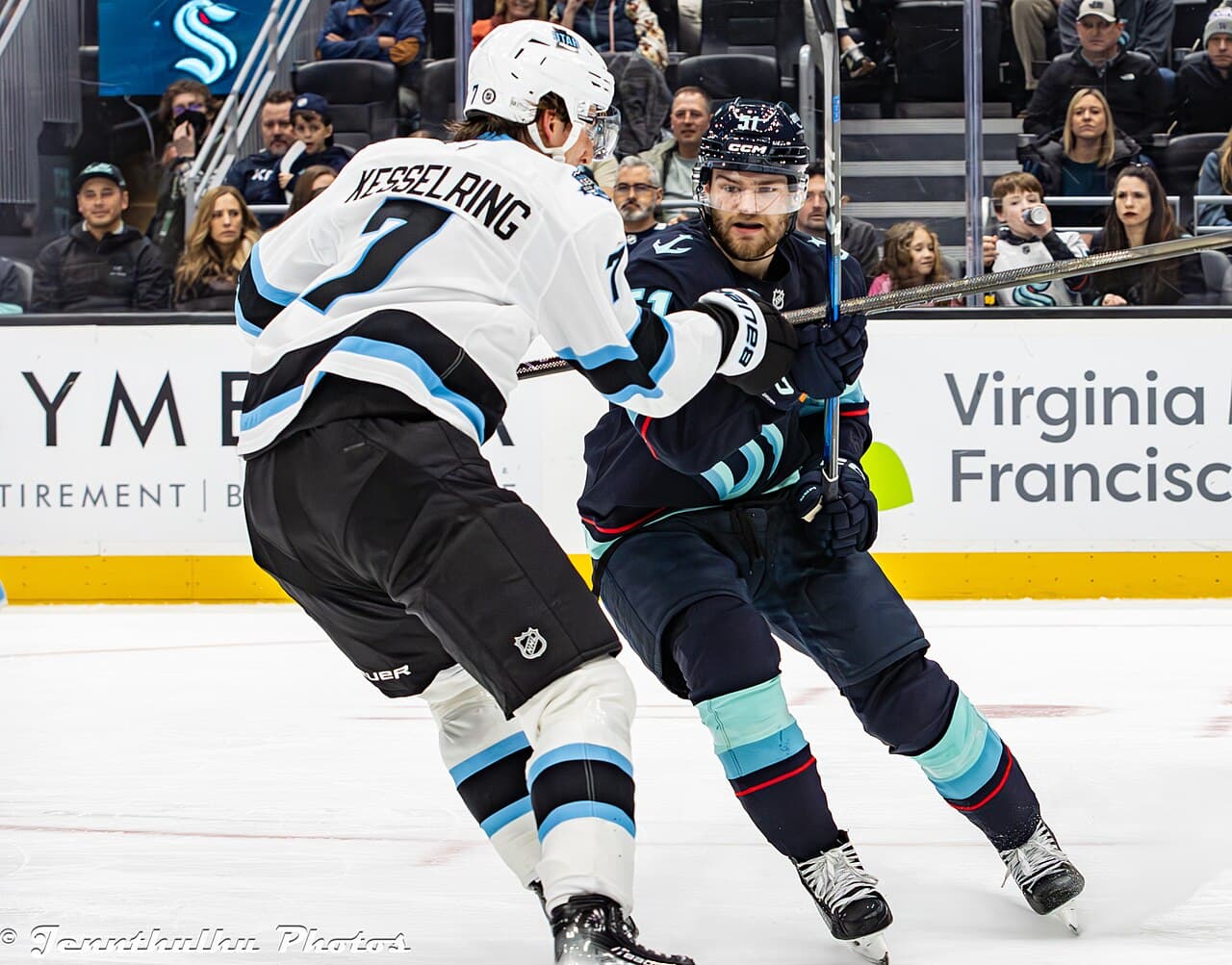
The News
The San Jose Sharks have officially acquired defenseman Michael Kesselring and the No. 27 overall pick in the 2026 NHL Draft from the Buffalo Sabres in exchange for the No. 20 overall pick. The trade, confirmed by NHL.com, ESPN and both clubs, was completed on June 17. It is a done deal, not an "agreed in principle," which is the first thing fantasy managers and bettors should note.
This is the kind of low-volume transaction that rarely moves a betting line but can quietly create a fantasy asset. San Jose retreated seven slots in the first round to add a 26-year-old, puck-moving right-shot defenseman, and for a rebuilding club with a thin blue line, that trade-down logic is worth unpacking.
The Trade Details
Kesselring, 26, is in the final year of a two-year, $2.8 million contract carrying a $1.4 million average annual value, and he is eligible to become a restricted free agent on July 1. He arrived in Buffalo last summer as part of the package that sent JJ Peterka the other way, after coming up through the Arizona Coyotes and Utah Mammoth organizations.
His one season in Buffalo was difficult. He appeared in only 34 games, hampered by injuries and repeated healthy scratches, and registered two assists. That limited sample is exactly why this is a buy-low profile: the talent that made him a movable asset is intact, but his recent production gives no fantasy floor to point to. San Jose, meanwhile, retains a strong draft hand even after the swap, still holding the No. 2 overall pick along with the newly acquired No. 27.
Why San Jose Made the Move
For a team building around a young forward core, the Sharks' most glaring need is on the back end. The roster conversation in San Jose has centered on its forwards, while the blue line has lacked locked-up, dependable top-four pieces. Adding a right-shot defenseman who can move the puck addresses a structural hole, and doing it while only sliding from 20 to 27 in a draft where the Sharks already own the second pick is low-cost.
The fantasy hook is opportunity. On a contender, Kesselring profiles as a third-pair or rotational option. On San Jose, the path to top-four minutes and power-play exposure is far more open. Reporting around the trade flagged his shoot-first instincts from the point as a potential fit on a unit featuring the Sharks' top young offensive talent. That is the difference between a buried depth defenseman and a streamable fantasy contributor.
Fantasy and Dynasty Outlook
The honest assessment: Kesselring is not a draft-day target in standard one-year leagues based on last season's two-assist line. His value is entirely projection and role. If he wins a top-four job and any power-play time on a Sharks team that should generate volume offense around its young core, he becomes a deep-league and dynasty stash with category appeal in shots, blocks and hits.
The first checkpoint is contractual. As a pending restricted free agent, Kesselring needs a new deal before any of this matters, and the modest qualifying number works in San Jose's favor. The second checkpoint is health. His Buffalo season was wrecked by availability, and a clean bill of health is the prerequisite for the minutes that would make him fantasy-relevant. Dynasty managers in deep formats can justify a late flier; redraft managers should wait for confirmed deployment in training camp.
The Verdexed Angle
From a betting lens, this trade does not move San Jose's win total or playoff odds in any meaningful way. The Sharks remain a rebuilding club, and a depth defenseman swap is noise against that backdrop. The more interesting signal is what it says about San Jose's draft strategy: a team comfortable trading down from 20 while holding the No. 2 pick is prioritizing immediate roster competence alongside its top-end swing, and that organizational patience tends to depress short-term team totals.
For fantasy, the Verdexed read is to treat Kesselring as a classic opportunity arbitrage. Players who underperform on a crowded, veteran blue line and then move to a team desperate for puck-movers are precisely the profiles that outproduce their draft cost when the role materializes. The risk is binary: top-four minutes plus power play makes him useful, and a third-pair role makes him droppable. Bet on the situation, not the past stat line, and only in formats deep enough to absorb the downside.
The smartest play is to monitor, not commit. Add him to a watch list, flag the RFA signing, and pounce only if camp reporting confirms a top-four role.
What's Next
Two events will define Kesselring's fantasy trajectory in the coming weeks. First, the July 1 restricted free-agency window, where San Jose is expected to retain him at a manageable number. Second, the team's broader offseason blue-line work, including whether the Sharks pursue additional defensemen that would push Kesselring back down the depth chart.
The 2026 Draft itself is the immediate next beat, with San Jose's No. 2 and No. 27 selections now in focus after the swap. How the Sharks use that extra late first-rounder, whether they keep it or flip it for more established help, will further clarify how urgently they want to round out the back end around Kesselring.
For managers, the action item is simple: this is a hold-and-watch asset, not a buy. The trade is confirmed, the contract is the next domino, and the deployment that determines his fantasy value is still to be decided in San Jose's camp. Flag the RFA signing, track the depth chart through the summer, and let opportunity tell you when to act.