MLB Today's Best Bets (June 22): Bradish Gives the Model Its Cleanest Side on a Modest-Edge Monday
By Verdexed Analytics
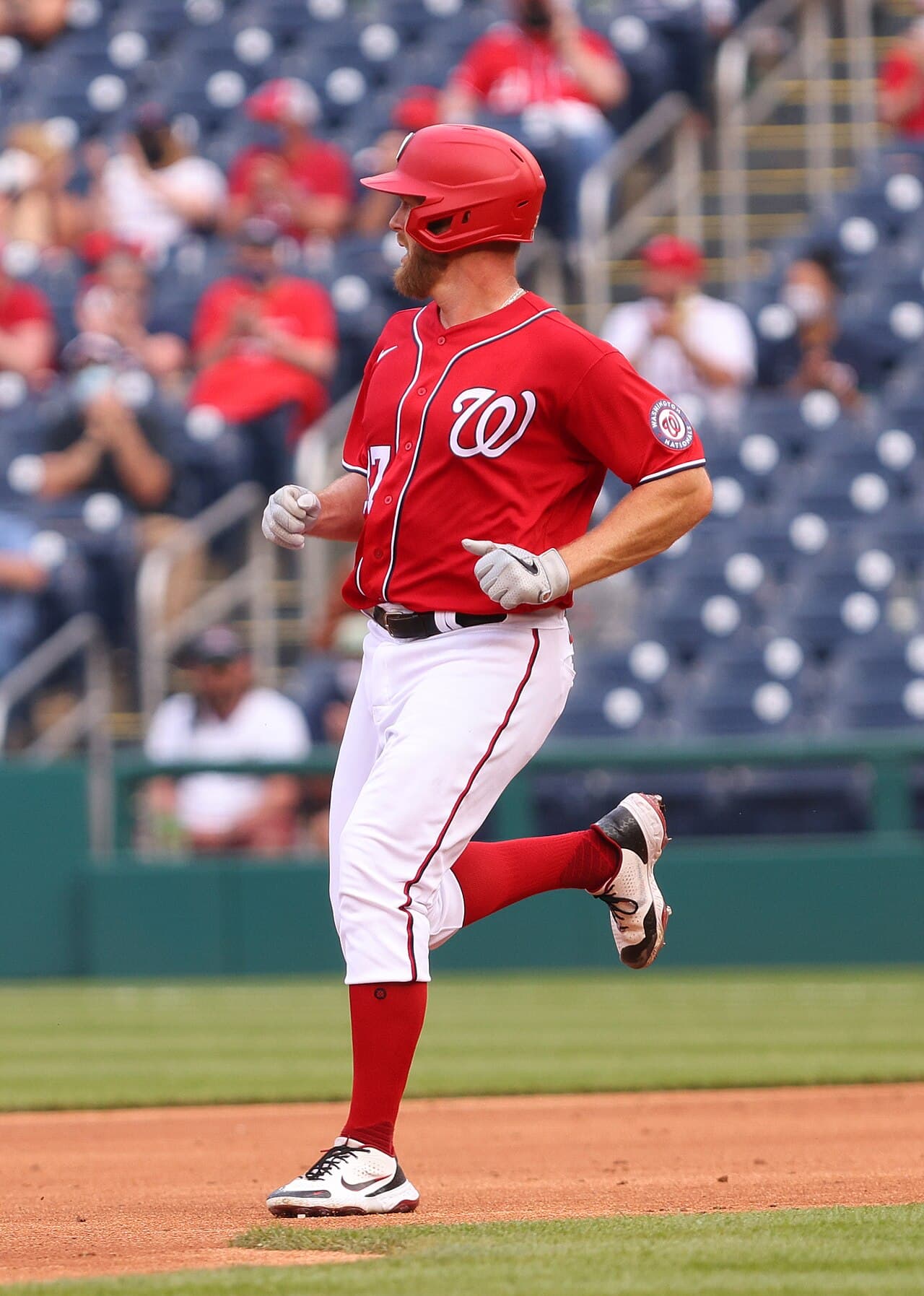
Major League Baseball is the only league still on the board in late June, so a 12-game Monday card is the entire slate. The NBA season ended with the Knicks lifting the title, the NHL crowned the Hurricanes and has already moved into draft week, and the NFL sits in its summer lull, which leaves every name below a baseball one. Across the card, Verdexed's model lands its cleanest high-confidence side in Anaheim, where Kyle Bradish and the Orioles draw a struggling Angels club, and finds little else that separates loudly from the market. What follows is model output, not betting advice, written for readers who are 21 and older and who want to understand what the numbers project rather than be told what to wager.
The honest headline is a quiet one. The model's surest-looking game is also the day's clearest market favorite, Baltimore priced around -162, and most of the rest of the slate clusters close to even. A thin-edge day is a real finding, not a failure to look hard enough, and today the numbers say the separation is modest.
How to read this
These are model probabilities and edges measured against the market price, published for information and entertainment, not as advice. Verdexed's own accuracy page was not cleanly retrievable at the time of writing, so readers should check the live figure at verdexed.com/mlb/accuracy rather than take any single write-up on faith. As a general expectation, high-confidence MLB sides tend to land somewhere around three in five over a month, with rough days mixed in, and that framing matters more than any single percentage: even a clear favorite loses regularly, and a price near -162 still implies the favorite goes down roughly two times in five. An edge means the model reads the consensus line as slightly mispriced, not that the result is settled.
The model's top edges today
**Orioles over Angels (Bradish vs Aldegheri).** This is the cleanest high-confidence side on the board, and it is built on the rotation matchup rather than on the standings. Kyle Bradish (4-7, 4.00 ERA) draws Samuel Aldegheri (2-2, 4.50 ERA) at Angel Stadium, and the market has Baltimore around -162 despite the Orioles playing on the road at 37-42 against a 32-47 Los Angeles club. The model leans the same direction the book does, which is worth stating plainly: a sub-.500 favorite is leaning on the arm, not the record, so the projection assumes Bradish carries it.
**Dodgers over Twins (Lauer vs Matthews).** Los Angeles projects as a favorite in Minnesota, but a modest one. Eric Lauer is listed as the Dodgers' probable starter, a back-of-rotation arm rather than an ace, so the model's tilt toward Los Angeles leans more on lineup and bullpen depth than on the pitching matchup, and it files the game as a lean rather than a loud edge. Confirm the probables before first pitch, since a projected starter is not a confirmed one.
**Astros and Framber Valdez at Toronto (vs projected Gerrit Cole).** Valdez gives Houston one of the day's stronger arms, and the model leans the Astros where he starts. The caveat sits on the other side: Gerrit Cole is listed as Toronto's projected starter, and a projected starter is not confirmed until the team posts it, so a late change there could move the read before first pitch. Treat this as a lean with a starter asterisk, not a settled number.
**Cubs at Mets (Imanaga vs Senga).** This is the closest thing to a contrarian read on the card, and it is genuinely close. Shota Imanaga (4-6, 4.26 ERA) draws Kodai Senga, who returned from a roughly seven-week absence (back and nerve issues) to a rough outing and carries an ERA near 9.00 across limited work since coming back. The market prices Chicago only as a slight favorite, near -112, because Senga's talent and strikeout rate still command respect. The model leans the Cubs, but treats it as a coin flip with a tilt, not an edge worth headlining.
**Near-even cluster.** The remaining games (Yankees at Tigers, Royals at Rays, Brewers at Reds, Guardians at White Sox, Diamondbacks at Cardinals, Rangers at Marlins, Red Sox at Rockies, Phillies at Nationals) read close to even in the model, with only faint leans and no edge worth flagging. On a 12-game card, honesty means saying that most of the slate sits near a coin flip, and the genuine, if modest, separation is on the games above.
What could go wrong
Start with Baltimore. A sub-.500 road team priced at -162 is leaning entirely on the pitching matchup, and Bradish, effective as his ERA is, still has to be backed by an offense that has scuffled this season. In Toronto, the obvious risk is the projected-starter caveat: if Gerrit Cole is scratched or pushed back, the model's read on that game changes before first pitch, so confirm the probables. In New York, Senga is exactly the kind of high-variance arm who can either melt down again or flash the form that once made him an All-Star, which is why the model keeps that one near even. As always with baseball, bullpen volatility and ballpark weather, with Coors Field in Denver the usual wildcard on totals, can override a clean projection on any side, and the model's edges are probabilities, not promises.
Responsible play
**This is model output, not betting advice.** Verdexed publishes its model's probabilities and edges for informational and entertainment purposes only. Nothing here is a recommendation to place a wager, and no outcome is guaranteed, even the model's highest-confidence picks lose regularly.
**You must be of legal betting age in your jurisdiction** and located where sports wagering is legal to bet. Sports betting is not available everywhere; know and follow the laws where you are. Never bet more than you can afford to lose, and never chase losses.
If gambling is affecting you or someone you know, help is available. In the US, call or text **1-800-GAMBLER** (1-800-426-2537), or visit ncpgambling.org. Please play responsibly.