Yesterday's picks: how the model did (August 10)
By Verdexed Analytics
There is no graded line for August 10. A column was published for Monday's ten-game MLB board, but it stated no sides, claimed no edges and assigned no confidence tiers, because Verdexed's per-game probabilities were not retrievable when it went out. The honest entry is zero picks, zero correct, zero incorrect. The day still produced a result worth recording, and it does not flatter this desk: the market's chalk took a beating, and the one game the column leaned on went the other way.
The scorecard
Zero stated directions, zero correct, zero incorrect for August 10.
The stated-side ledger does not move. Five graded cards read 2-0, 1-1, 2-2, 3-2 and 4-2, or 12-7 across 19 decisions. It last moved on August 4 and has now sat still through six consecutive slates.
No trailing accuracy figure and no Brier value are claimed, because none was retrievable. Verdexed's public accuracy surface could not be reached at publication, and no per-game or per-tier number for August 10 was available anywhere else this desk could source. The streak without a quotable calibration figure, first flagged in these columns at the start of the month, now extends past a week. That is an absence and nothing more, neither a quiet good result nor a quiet bad one.
What can be graded is the market, which is a different instrument entirely. Across the five Monday games where the column quoted a specific price, favorites went 2-3: Toronto beat Boston, listed near -175; New York beat Atlanta, near -140; Minnesota beat Baltimore, near -112; Tampa Bay, near -146, won; and Los Angeles, the board's biggest favorite near -325, won. Add the two games the column called narrow home favorites without a confirmed price, St. Louis and San Diego, and the chalk finished 3-4 on the seven. Those are facts about the board, not about Verdexed's model, and none of it is credited or debited here.
Best call / worst miss
There is no best call and no worst miss, because there was no call. Naming one after the fact from a slate the desk declined to handicap is the exact failure this column exists to prevent.
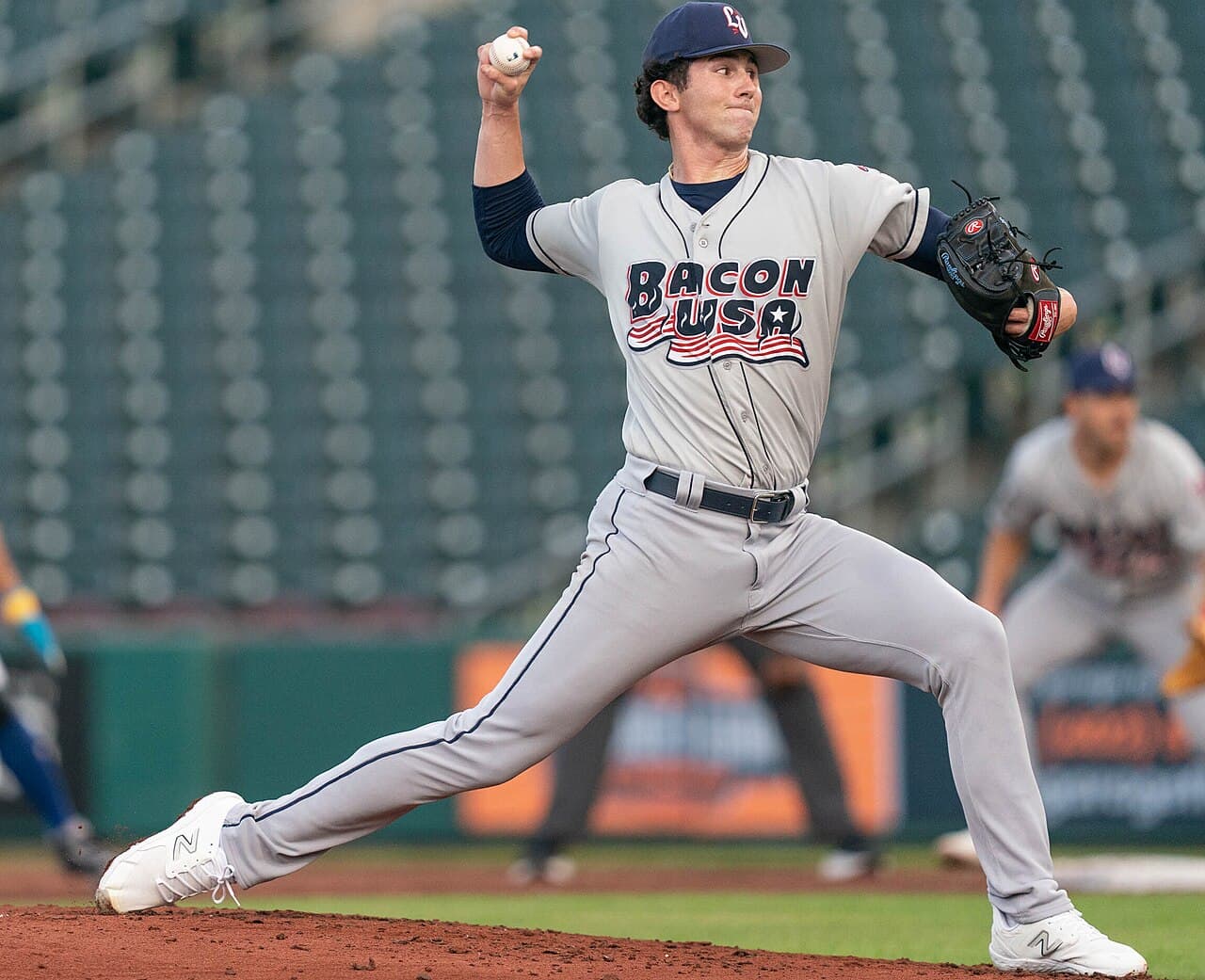
What does belong on the record is that the column put its weight somewhere, and that read lost. It identified Boston at Toronto as the widest starter mismatch on paper, Sonny Gray at 14-2 with a 2.78 ERA against a Toronto starter carrying an ERA near six. **Blue Jays 2, Red Sox 1** at Rogers Centre. Gray fell to 14-3, allowing two runs on six hits over six innings. Jameson Taillon, the 5.96 ERA half of that mismatch, gave up one hit across four scoreless innings before leaving with forearm discomfort, and Louis Varland closed it for his 25th save. A read built from win-loss records and season ERAs invites precisely that outcome, and it landed on this desk's own framing.
The second unflattering result came at Busch Stadium. **Phillies 6, Cardinals 5**. Andrew Painter, listed in the column at 1-8 with a 6.48 ERA, carried a no-hitter into the sixth and finished with two earned runs over 5 1/3, striking out six. Edmundo Sosa drove in three. Two of the column's three most lopsided-looking pitching lines produced the opposite of what the lines implied.
One structural read did hold. **Twins 9, Orioles 5** at Target Field, where Dean Kremer faced his former club ten days after the trade that sent him to Minnesota and threw seven innings of one-run ball with seven strikeouts. And the board's biggest price survived: **Dodgers 6, Royals 5**, decided on a Freddie Freeman RBI single. Elsewhere, **Mets 8, Braves 5**, where Brett Baty hit a first-inning grand slam off Bryce Elder; **Rays 10, Athletics 6**, Tampa Bay scoring eight unanswered after trailing 6-2; and **Padres 3, Brewers 2** on Jackson Merrill's homer.
What it means
Nothing about Monday changes the read on the model, because Monday produced no evidence about the model. The ledger stands at 12-7 over 19 decisions, and 19 decisions carry essentially no signal in either direction. Anyone treating that number as a track record is reading too much into it.
The favorites going 3-4 is likewise not a finding. Prices between -110 and -175 describe teams that win between 52 and 64 percent of the time, so a seven-game night where three of them cash is ordinary baseball, not a market breaking down. It would be as wrong to call that a bad day for chalk as to call it a good day for the model.
The actual finding is continuity, and it is a problem. Six slates have now passed without a graded decision, and more than a week has passed since a trailing accuracy or Brier figure could be quoted. Monday was a partial step forward, in that a board was published where the previous two days had none, but a board with no stated sides is not something a scorecard can grade. A model that grades itself in public is only as credible as the days it reports, and the failure mode for an accountability desk is never a losing day. It is a quiet gap that readers fill in with the assumption that things must have gone well. So the gap gets published again.
Responsible play
**This is a record of past model output, not betting advice.** Verdexed grades its model in public for transparency and entertainment. Past results do not predict future outcomes, nothing here is a recommendation to place a wager, and no pick is ever a guarantee, even a strong model loses regularly.
**You must be of legal betting age in your jurisdiction** and located where sports wagering is legal to bet. Sports betting is not available everywhere; know and follow the laws where you are. Never bet more than you can afford to lose, and never chase losses.
If gambling is affecting you or someone you know, help is available. In the US, call or text **1-800-GAMBLER** (1-800-426-2537), or visit ncpgambling.org. Please play responsibly.