Jordan Walker's Breakout Is for Real: MLB-Leading Exit Velo and a Fixed Swing Path
By Verdexed MLB Desk
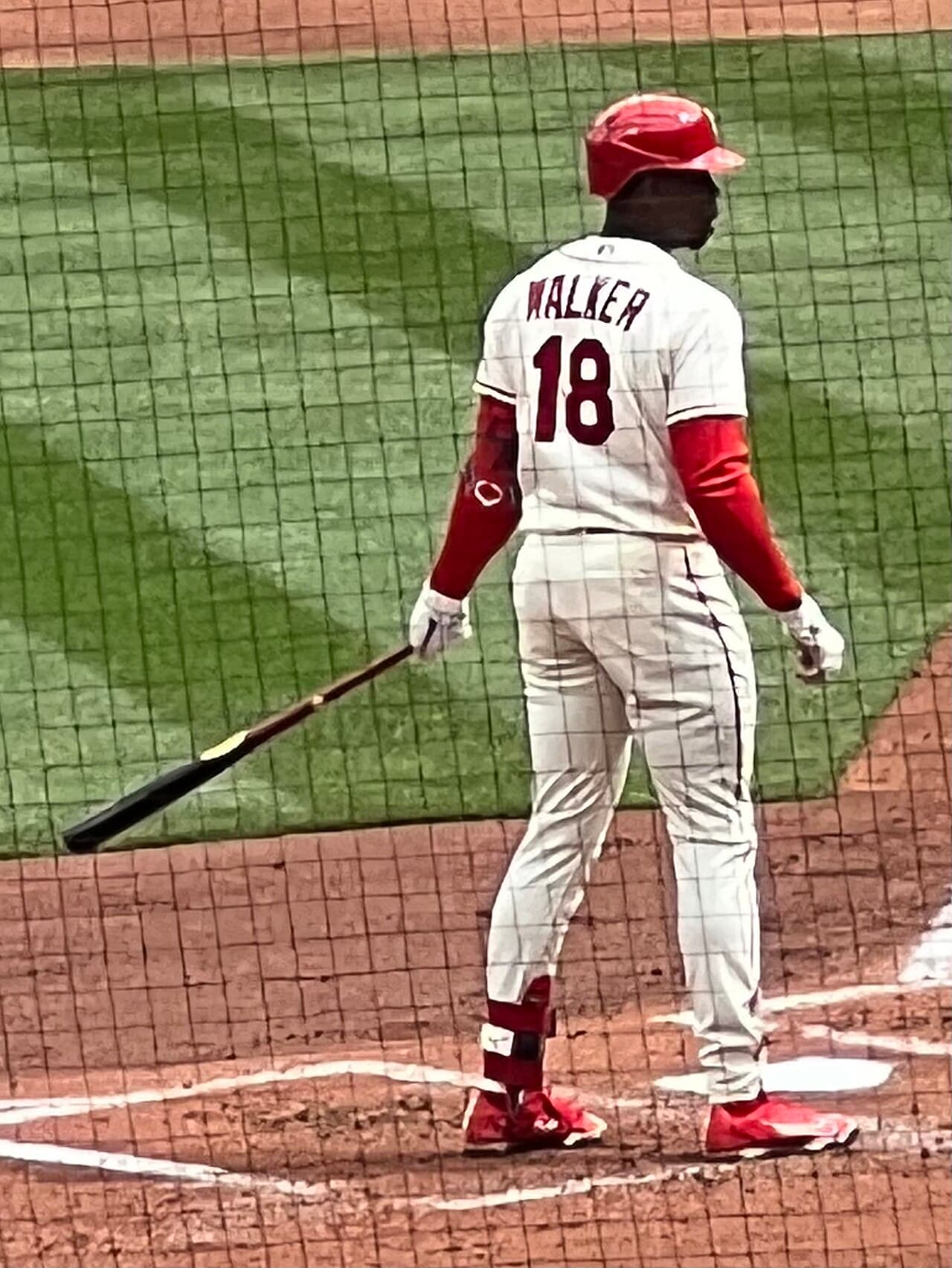
Jordan Walker is in the middle of a genuine breakout, leading the St. Louis Cardinals in major counting categories and slugging at an MLB-best level. The profile underneath the production is what makes it credible rather than a hot streak: Walker owns one of the highest average exit velocities in the league, near the top of MLB, and he has overhauled his batted-ball distribution in a way that explains the power surge. For fantasy managers weighing whether to hold or sell, the underlying signals point clearly toward holding.
The mechanical change driving the power
The core of Walker's breakout is a dramatically increased air-ball rate. Fly balls now make up roughly 40 percent of his batted balls, a sharp jump from a well-below-average career mark around 23 percent. That shift is the single most important development in his profile, because elite exit velocity only translates to power when the ball is hit in the air. For years, Walker punished the ball but too often pounded it into the ground, leaving production on the table.
By lifting the ball more consistently, Walker has unlocked the damage his contact quality always promised. He carries around 15 home runs on the season, and the combination of more air balls and top-of-the-scale exit velocity is exactly the recipe that turns hard contact into extra-base hits and home runs. This is not a case of a hitter getting lucky on placement; it is a hitter changing the type of contact he makes.
The supporting Statcast data reinforces the picture. Walker grades among the league's best in hard-hit rate, and his bat speed has been repeatedly cited as elite. Those are the inputs that tend to persist, and together they form the backbone of a sustainable power profile rather than a fluke.
Why analysts call it sustainable
The distinction between a real breakout and a sell-high mirage usually comes down to whether the gains are rooted in repeatable skills or in fortunate outcomes. Walker's case sits firmly on the skill side. Exit velocity and bat speed are among the stickiest metrics in baseball, meaning they tend to hold steady year over year far more reliably than results-based stats like batting average on balls in play.
Analysts evaluating Walker have landed on a hold rather than a sell-high label, and the reasoning is straightforward: the batted-ball and exit-velocity gains that are driving his production are the kind that stick. When a hitter with elite contact quality fixes the one thing holding him back, in this case his tendency to hit the ball on the ground, the resulting improvement is more likely to be a new baseline than a temporary spike.
Notably, the case for Walker rests on what is verified about his profile. Precise figures like an exact home run total or a specific swing-path tilt metric are best left unstated, and his batting average is not the load-bearing part of the argument here. The durable signals are the air-ball rate change and the elite contact quality, and those are enough to justify confidence.
The Verdexed model take
The Verdexed model treats fly-ball rate paired with elite exit velocity as one of the stickiest combinations in the sport, and Walker is close to a textbook example. The logic is mechanical: exit velocity measures how hard a hitter strikes the ball, and air-ball rate measures whether that contact is launched at angles that produce extra-base damage. Strong marks in both at once tend to be self-reinforcing and resistant to regression.
The reason the model leans on this pairing is that each metric covers the other's blind spot. A high exit velocity with a ground-ball-heavy profile produces hard outs; a high air-ball rate with weak contact produces lazy fly balls. Walker now posts both, which is why the model reads his power as durable rather than as the front end of a coming correction. The mechanical change appears to be a real adjustment, not noise.
That framing leads to a clear conclusion: do not sell Walker at a discount. His production is supported by the inputs that hold up best over time, and the market value attached to a hot stretch often undersells a player whose breakout is rooted in fixed mechanics. If anything, the gap between perception and underlying skill can create a buying opportunity.
Fantasy fallout
For managers who roster Walker, the directive is simple: hold. The temptation to cash in on a breakout at peak value is understandable, but the evidence argues against it. Selling a hitter whose gains are anchored in elite exit velocity and a sustainable air-ball rate risks giving away a player who has plausibly reached a new level rather than peaked.
For managers who do not roster him, the angle is to buy if the current owner is nervous. Breakout hitters often come with a window where the manager holding them fears regression and is willing to move them for less than their true value. Given how well Walker's underlying metrics support the production, acquiring him at a discount driven by that nervousness is an attractive play. The batted-ball and exit-velocity gains tend to stick, which is exactly what a buyer wants.
The positional and lineup context adds to the appeal. As the Cardinals' leader in major counting categories, Walker occupies a central role in the offense, which supports his run-producing opportunities going forward. That volume, combined with the contact quality, makes him a strong hold or buy target across formats.
Betting and DFS angle
For daily fantasy and player props, Walker profiles as a strong home run prop and total-bases target in favorable matchups. The case rests on his elite contact quality: hitters who combine top-of-the-league exit velocity with a healthy air-ball rate generate the kind of consistent hard contact that supports both home run and extra-base outcomes, particularly against pitchers who allow fly-ball contact or in hitter-friendly settings.
The disciplined approach is to target his props in spots where the matchup amplifies his strengths rather than blindly every day. In favorable park and pitcher matchups, his total-bases line and home run odds carry real appeal given the underlying batted-ball profile. The same contact quality that makes his breakout sustainable for fantasy purposes makes him a credible prop target for bettors.
What's next
The things to watch are whether Walker sustains the elevated air-ball rate and whether his exit velocity holds near the top of the league as the season wears on. Those two markers will confirm the breakout is the new baseline rather than a stretch to be regressed.
For fantasy managers, the takeaway is to hold Walker confidently, or buy him if his current manager is anxious about regression, because the metrics driving his power are the kind that stick. For DFS players and bettors, treat him as a quality home run prop and total-bases target in favorable matchups, leaning on his elite contact quality as the edge.