Jordan Walker's Breakout Is Real: The Statcast Says the Cardinals Outfielder Is a Hold, Not a Sell
By Verdexed Analytics
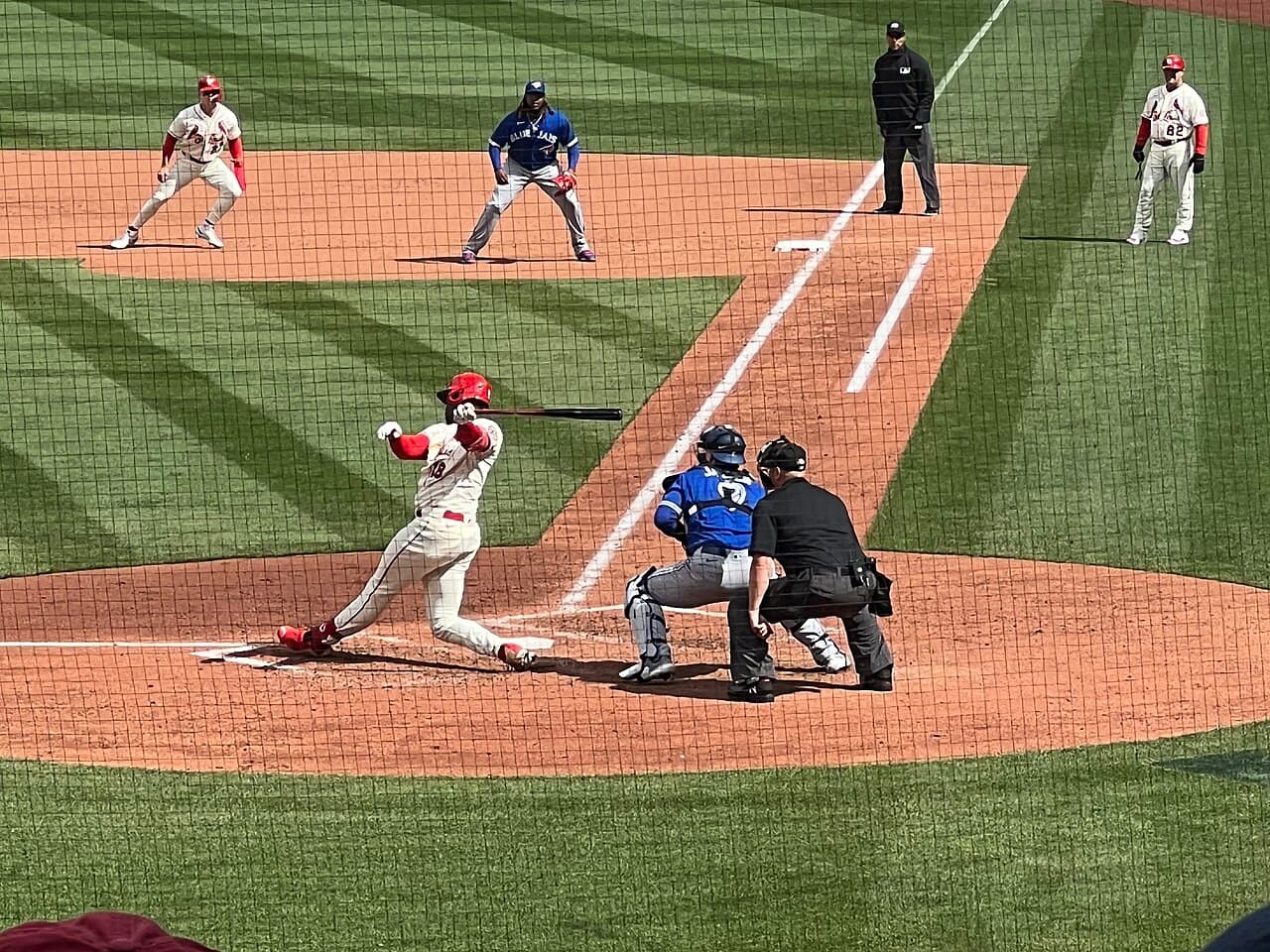
Jordan Walker has finally turned his prospect pedigree into production, and the underlying numbers say the breakout is built to last. The St. Louis Cardinals outfielder has already matched his career single-season home run high in roughly 61 games while leading the team in batting average, home runs, and RBI, a leap that has fantasy managers facing a familiar question: hold or cash in. The Statcast profile behind the surge gives a clear answer, and it is to hold.
Walker arrived in the majors as one of baseball's most hyped young hitters, and the raw tools were never the issue. The gap between the prospect billing and the big league output came down to how he was hitting the ball, specifically a tendency to beat it into the ground and waste his enormous raw power. This season he has closed that gap, and the metrics suggest the change is mechanical and repeatable rather than a hot streak waiting to cool.
The Statcast case
The quality-of-contact numbers are the headline. Walker is posting an average exit velocity in the mid-90s, a hard-hit rate above 50 percent, and a barrel rate in the mid-teens, a trio of marks that places him among the most punishing hitters in the league. His bat speed grades at the very top of the scale. These are not luck-driven outcomes; they are the inputs that produce power, and they are stable from month to month in a way that batting average on balls in play is not.
The driver behind the surge is a swing change that has cut his ground-ball rate and put more balls in the air, particularly to his pull side, where his power plays best. That is the precise adjustment analysts had been waiting for. A hitter with elite raw power who stops pounding the ball into the dirt and starts lifting it is the textbook recipe for a sustainable power breakout, and the batted-ball data confirms Walker has made exactly that change rather than simply running hot.
Fantasy fallout
The fantasy implication is direct: Walker is a hold and arguably a buy, not a sell-high. Managers who have grown accustomed to his earlier struggles may be tempted to flip him to a rival while his name value is peaking, but the metrics say his production is real and likely to continue. Selling now would mean cashing out a five-category-capable outfielder right as his profile stabilizes into something genuinely valuable.
If anything, the move is to buy from a skeptical owner. There are still managers who remember the uneven early returns and may undervalue the breakout as a fluke. A manager who trusts the Statcast can acquire a young outfielder with 30-home-run upside at a discount tied to outdated perceptions. The pulled-fly-ball approach also makes Walker a sensible target for home run and total-bases prop bettors on days his matchup and ballpark cooperate.
The one caveat
The lone complication is roster context. The Cardinals' season trajectory will shape Walker's lineup environment, and any team-level changes around him, whether in the batting order or the surrounding cast, could affect his counting stats even if his rate production holds. Run production stats like RBI and runs depend on the players hitting around him, so his ceiling in those categories is partly out of his control.
That caveat is about counting stats, not skills. Walker's batting average, power, and quality of contact are his own, and those are the metrics the breakout rests on. Even if his lineup context shifts, the core profile, elite contact quality plus an improved launch angle, travels with him. Managers should weigh the context risk as a minor adjustment to his RBI and runs ceiling, not as a reason to doubt the breakout itself.
The Verdexed model take
The Verdexed model treats Walker's breakout as substantially real, anchoring its projection to his quality-of-contact metrics rather than his surface-level batting average, which can fluctuate. The model reads the swing change and the improved air-ball profile as a genuine talent shift, raising his rest-of-season power projection and flagging him as a hold across formats. The elite exit velocity and barrel rate are the kind of inputs the model trusts most, because they are both predictive and slow to regress.
The model's measured note is on the counting stats, where it accounts for lineup-context uncertainty by keeping his RBI and runs projections a touch more conservative than his raw power would otherwise suggest. The net read is bullish: a young hitter who has unlocked his power in a sustainable way is exactly the profile the model wants managers holding, with the only material risk being team-level factors outside his control.
What to do in your league
Hold Walker and decline the sell-high offers, because the Statcast says the production is real and likely durable. If a skeptical rival undervalues him, make the buy. For daily players, lean into his power props in favorable spots, given the pulled-air-ball approach that maximizes his home run output. The only adjustment to make is a modest one on his counting stats tied to how the Cardinals' lineup shakes out.
The broader lesson is to trust the batted-ball data over the narrative. Walker spent his early career labeled as unfulfilled potential, but the metrics now describe a hitter who has made the exact adjustment that turns raw power into production. That is a player to roster with confidence, not one to trade away at the first attractive offer.