Chase DeLauter Is the Guardians Rookie to Own: Cleveland Needs His Bat More Than Ever
By Verdexed MLB Desk
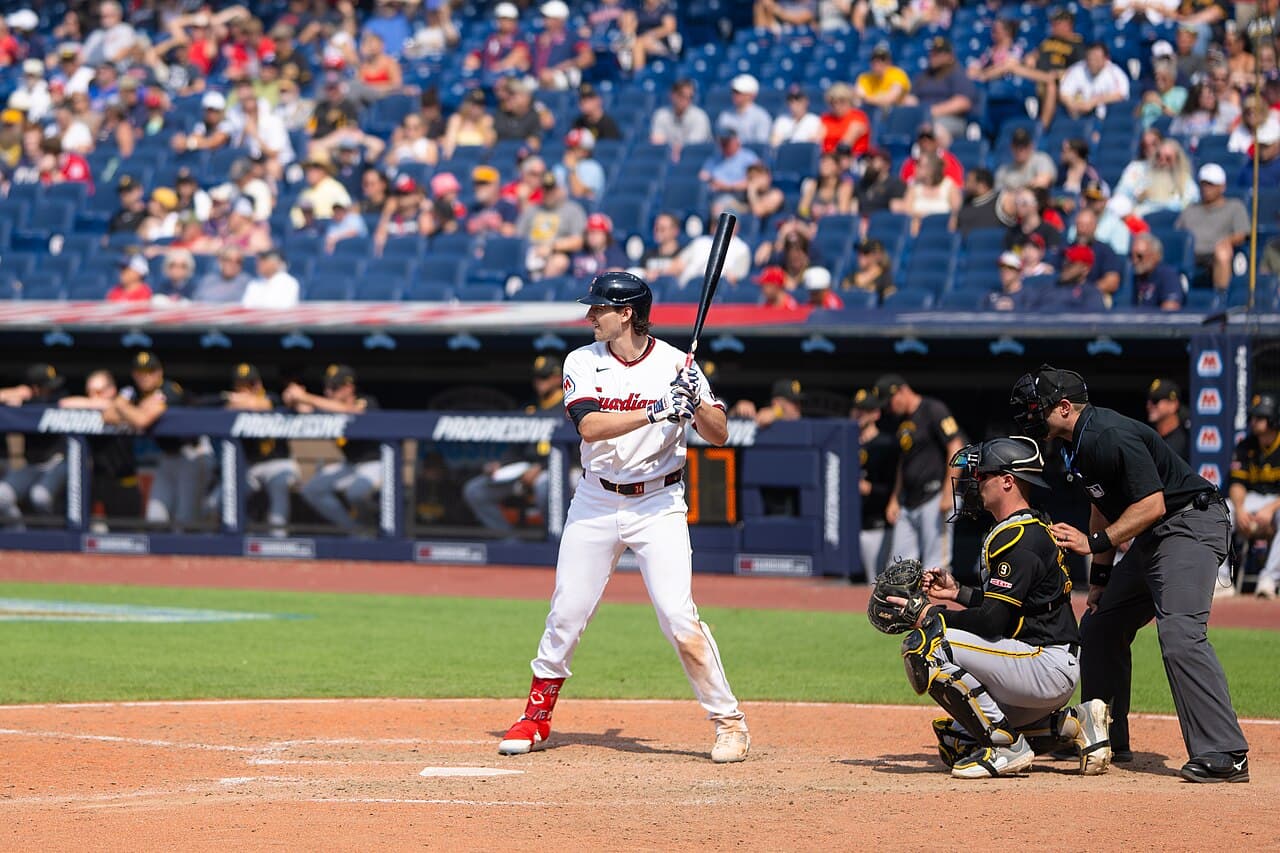
Chase DeLauter has spent his rookie season validating the hype that made him one of the most coveted prospects in the Guardians system, and the timing of his emergence could not be better for fantasy managers. With Jose Ramirez now on the injured list after fracturing his hamate, Cleveland needs DeLauter's bat to carry more of the offensive load, and that elevated role makes the rookie outfielder one of the more appealing buy-or-hold targets in leagues where he is still rostered loosely or available altogether.
DeLauter announced himself on Opening Day, going 3-for-5 with two home runs against the Mariners, and the power kept coming. He reached five home runs faster than any rookie in the last five seasons, hitting the mark in just his first handful of games. Through the season's first two-plus months he carried a solid average with mid-single-digit home runs and a respectable RBI total, the kind of well-rounded line that plays in every format rather than a one-trick power profile.
The skills behind the production
What separates DeLauter from a typical hot-starting rookie is the underlying plate discipline. His chase rate sits near the very top of the league, a sign that he is not expanding the zone or getting exploited by advanced sequencing the way many first-year hitters do. Elite swing decisions are the most predictive rookie skill there is; they travel from level to level and they protect a hitter through the inevitable cold stretches. When a young bat controls the strike zone like this, the floor is far higher than the surface stats suggest.
That does not mean the ride has been free of turbulence. DeLauter has already worked through his first real rough patch at the major league level, the standard adjustment period as pitchers build a book on him and start attacking his weaknesses. That cooling stretch is exactly the kind of thing that spooks shallow-league managers and creates a window for everyone else. A rookie with this caliber of plate discipline tends to make the counter-adjustment, and the dip in production is a buying opportunity rather than a reason to bail.
Fantasy fallout: a bigger role in a thinner lineup
Ramirez's absence changes DeLauter's context in two ways that both help his fantasy outlook. First, the Guardians lose their primary run producer, which pushes the lineup to lean on its younger bats for power and protection, and DeLauter is the most natural candidate to slide up the order and see more high-leverage at-bats. Second, with fewer established hitters around him, his counting-stat opportunities, particularly RBI chances when he hits behind the table-setters, become more concentrated in his hands.
There is a caveat worth naming: a thinner lineup can cut both ways, because pitchers have less incentive to challenge a young hitter when the protection behind him weakens. That can mean more careful sequencing and fewer hittable pitches. But for a hitter with DeLauter's chase numbers, drawing walks is a feature, not a bug, and on-base production keeps his run-scoring relevant even if the RBI environment softens. In OBP and points formats especially, his value holds up regardless of how Cleveland chooses to fill the Ramirez void.
The Verdexed model take
The model views DeLauter as a hold-or-add in all formats and a clear buy in leagues where a manager soured on him during his recent slump. His combination of contact, power, and elite swing decisions projects to a stable rest-of-season line rather than the boom-or-bust profile that defines most rookies. The expanded role created by Ramirez's injury nudges his projected plate appearances and counting stats up, and the model rewards that opportunity with a modest tier bump.
The bigger edge is in the buy-low math. Rookies who hit a midseason wall almost always get sold below their true value, and DeLauter's underlying metrics argue strongly that the wall is temporary. Managers who target him during the dip are buying a hitter whose skills point up and whose situation just improved, which is the kind of asymmetric bet the model prizes. For dynasty and keeper players, the case is even cleaner: this is a foundational young bat in his first full season, and the price will never be lower than it is during a rookie cold streak.
What to do in your league
If you own DeLauter, hold through the slump and resist the urge to chase a hotter name. If he is on your bench because of the recent cooldown, get him back into your active lineup now that his role is expanding. And if he is rostered by a frustrated manager in your league, send the buy-low offer today, because the combination of a rookie wall and a teammate's injury is exactly the kind of noise that masks real value.
What's next
Watch where manager Stephen Vogt slots DeLauter in the order over the next week, because a move up toward the heart of the lineup would confirm the bigger role and unlock more counting stats. Also monitor his swing decisions as pitchers keep adjusting; if the chase rate stays elite through this stretch, the production will follow, and the managers who bought the dip will be the ones holding a difference-maker into the second half.