 MLB2026-06-12
Aroldis Chapman Headlines the Deadline Bullpen Market as the Red Sox Lean Toward Selling
By Verdexed MLB Desk
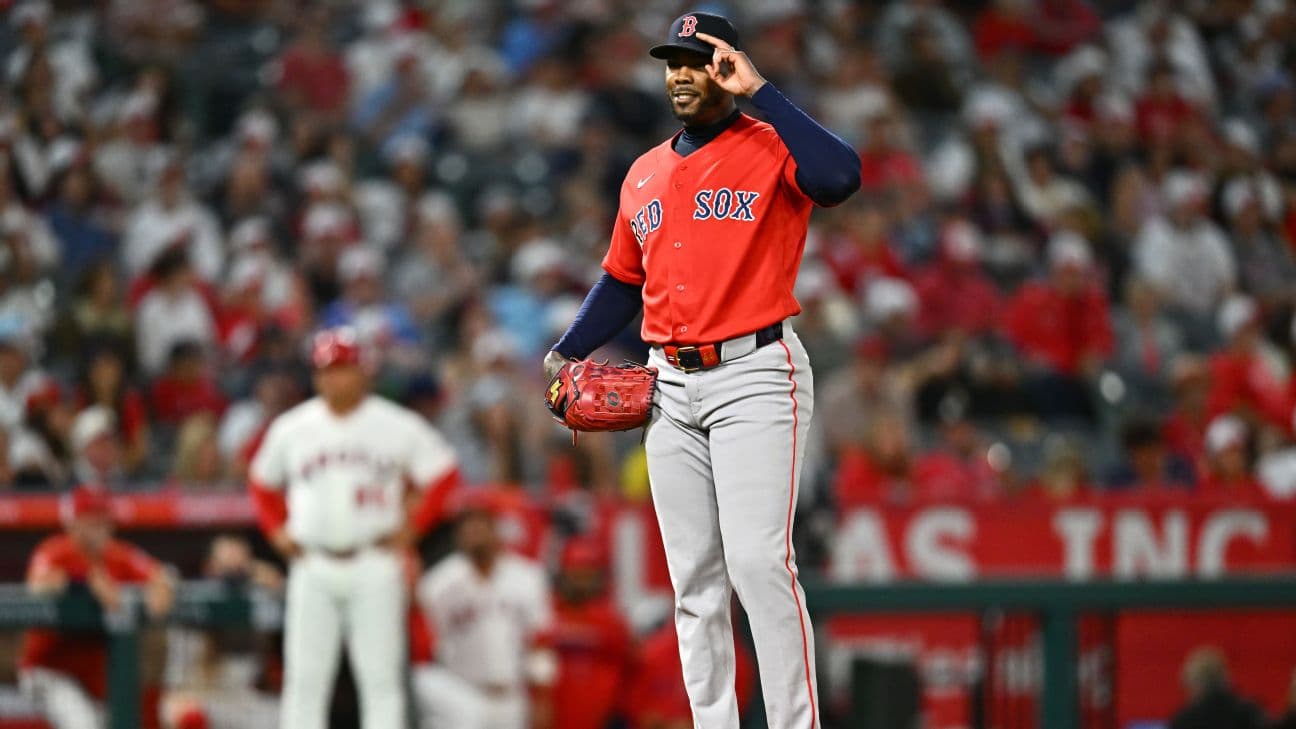
The reliever market is taking shape early, and Aroldis Chapman sits at the top of it. Reporting suggests the Red Sox are trending toward selling at the trade deadline, and their veteran closer has emerged as the most coveted bullpen arm available, described as the top reliever on contenders' target lists after a long run of converted saves dating back into last season. For fantasy managers, a closer changing teams is one of the most consequential deadline events, because it can both create and destroy saves value in a single transaction.
The appeal is obvious. A dominant left-handed closer with a track record of locking down the ninth is exactly what every postseason hopeful covets in July, and a Red Sox club that fades from contention has every incentive to cash in a rental reliever for prospects. The combination of a clear seller and a premium, in-demand arm is the recipe for a deadline domino that ripples across multiple fantasy rosters.
Why this matters for fantasy saves
Chapman's situation is a two-sided fantasy event. If he is traded to a contender, his role at the new club is the whole question: lands in a defined ninth-inning job and his saves value holds or rises; lands in a setup or matchup role behind an entrenched closer and his saves dry up even as his ratios stay elite. Managers who roster him for saves need to track not just whether he moves, but where, because the destination determines the category output.
The trade would also open Boston's ninth inning. Whoever inherits the closer role on a selling Red Sox team becomes an immediate waiver-wire target, the same dynamic that makes any vacated ninth inning valuable. Saves on a non-contender still count exactly the same in fantasy, so the reliever who steps up in Chapman's place could be a quietly important pickup for managers chasing the category down the stretch.
The contender's calculus
For buyers, Chapman is the kind of arm that shortens games in October, and the bidding should be competitive. A contender with a shaky back end, and there are several around the league, would view him as a difference-maker worth a real prospect cost. That demand is what makes him the headliner rather than a depth piece, and it is why his name leads the early deadline bullpen board.
The ripple extends to the teams that miss on him. A finite supply of elite relievers means the clubs that lose the Chapman sweepstakes pivot to the next tier, which inflates the cost of every other available arm. That cascade is why one marquee reliever moving tends to unlock the broader bullpen market, and why fantasy managers should expect a flurry of closer-adjacent movement once the dominoes start.
The Verdexed model take
Verdexed's model treats a closer's fantasy value as conditional on role, not reputation, which is the central lesson of any Chapman trade. The model holds his projected saves steady only if he lands in a defined ninth-inning job, and it discounts them sharply in any scenario where he slots behind an established closer. Until a deal and a destination are known, it carries his saves projection with wide uncertainty.
On the Boston side, the model elevates the projected saves of the likely in-house replacement the moment a Chapman trade becomes real, since a selling team still plays out games and still needs someone to close them. The model's edge guidance is to monitor the Red Sox bullpen for the next closer-in-waiting, who could be available cheaply right up until the deadline makes the situation obvious.
The betting angle
Deadline reliever moves reshape late-game markets. A contender that adds Chapman gets more reliable in late-and-close situations, which tightens its team-total-against and improves its live-betting profile when protecting a lead. Conversely, a Red Sox bullpen that ships out its best arm becomes more vulnerable in the ninth, a factor worth weighing in run-line and game-total exposure for Boston down the stretch.
The season-long markets feel it too. A clear seller flag on the Red Sox affects their remaining-schedule win expectations, while a buyer landing a shutdown closer marginally improves its postseason odds by shortening games. These are second-order effects, but they are exactly the kind of edges that show up before the broader market fully reprices a deadline move.
What to do in your league
If you roster Chapman for saves, do not panic-sell, but be ready to react to the destination. Hold through the uncertainty and reassess the instant a trade lands; a move to a closing job is a non-event for you, while a move to a setup role is your cue to pivot. In the meantime, his ratios and strikeouts provide value even if the saves picture gets murky.
If you are saves-needy, get ahead of the Boston vacancy. Speculatively stashing the Red Sox reliever most likely to inherit the ninth inning is a low-cost bet that could pay off the moment a Chapman trade clears, and it is the kind of proactive move that wins the saves category in the second half. Across the league, expect the whole reliever market to move once this domino falls, so keep your wire claims ready.
What's next
The deadline is the hard stop, but reliever deals often come together in the days before it as contenders firm up their bullpens. Watch for a Red Sox seller designation to become official and for Chapman's market to crystallize into a destination. The team he lands on, and the role he is promised there, will determine whether he remains a fantasy closer or becomes an elite setup man whose saves vanish overnight.