Edward Cabrera Carted Off as Cubs Rotation Crisis Deepens: Fantasy Fallout and a Deadline Mandate
By Verdexed MLB Desk
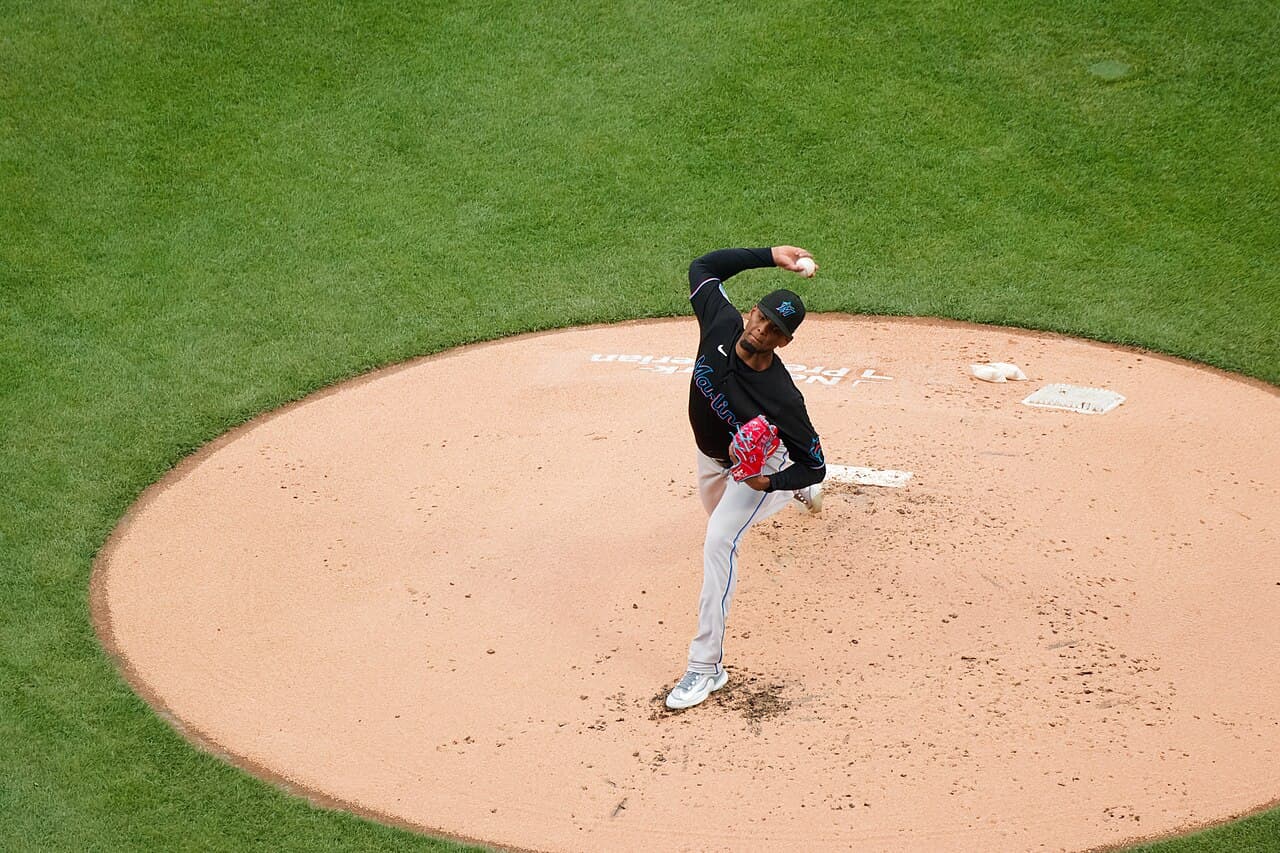
The Cubs' starting rotation went from thin to threadbare on Tuesday night. Right-hander Edward Cabrera was carted off the field after injuring his left leg while stretching for a throw covering first base against the Mets, and manager Craig Counsell confirmed afterward that Cabrera suffered a left hamstring and adductor strain, would undergo an MRI, and is headed to the injured list. For a Chicago club fighting to stay in the National League Central picture, the timing could not be worse, and the fantasy and deadline implications are immediate.
The injury and the pileup
Cabrera earned the win in his final inning of work, improving to 5-4 with a 5.10 ERA over 14 starts in his first season with the Cubs since they acquired him from Miami in January. The bigger problem is the company he now joins on the shelf. Chicago entered the night already without four starters: Matthew Boyd and Jameson Taillon are on the 15-day injured list, while Cade Horton and Justin Steele are on the 60-day IL. Losing Cabrera makes him the fifth rotation arm sidelined, gutting a unit that was supposed to anchor a contender sitting around .500 at 41-37.
A leg strain for a pitcher is rarely a short absence, because the lower half drives the delivery and clubs are cautious about rushing a return that could compromise mechanics or lead to a re-injury. Until the MRI sets a timeline, the safe assumption is that Cabrera misses meaningful time, and the Cubs are left patching a rotation with spot starters and bullpen games.
Fantasy fallout
For fantasy managers, Cabrera was always a streaky hold rather than a set-and-forget starter. His 5.10 ERA reflected the inconsistency that has followed him throughout his career, but the swing-and-miss upside kept him rosterable in deeper formats. With a leg strain and no clear return date, he becomes a drop in shallow leagues and an IL stash in deeper ones, where his strikeout ceiling is worth holding if your bench has the room.
The more actionable angle is who fills the innings. A rotation down five starters has to give starts to arms it would rather keep in the minors or the bullpen, and those replacements become streaming candidates in favorable matchups. None of them carries Cabrera's raw upside, but volume creates fantasy relevance, and a young arm handed a real rotation spot on a contender can earn wins and ratios worth chasing in two-start weeks. Monitor the Cubs' transactions over the next several days, because the next man up is the one your league should be watching.
The deadline mandate
This injury hardens what was already becoming obvious: the Cubs need pitching, and they need it at the deadline. A contender that loses its fifth starter and remains in the race cannot run out bullpen games into October, which makes Chicago one of the more motivated buyers in the starting-pitcher market. That connects directly to the rest of the deadline board, where rental starters and controllable arms are the most sought-after commodity.
The injury also raises the stakes on Chicago's bullpen, which is already being mentioned among the contenders linked to the market's top relievers. A front office that has to cover rotation innings while keeping the bullpen fresh is a front office that will be aggressive in late July. Expect the Cubs to be in on starting pitching at the top of their shopping list, with relief help close behind.
The Verdexed model take
Verdexed's team-projection model treats rotation depth as a leading indicator for second-half performance, because injuries to starters force innings onto less effective arms and inflate a club's run prevention. Stacking five rotation absences is exactly the kind of shock that moves a contender's projected win total and division odds downward, and the model has tightened Chicago's outlook accordingly until reinforcements arrive.
The betting read follows from there. Cubs game totals tick upward when a replacement starter takes the mound against a quality lineup, and their run-line value softens in those matchups until the rotation stabilizes. For bettors, the spots to attack are the bullpen-game and spot-start days, where the model sees the widest gap between Chicago's name recognition and its actual pitching on a given night. A deadline addition of a quality starter would reverse that, which is why the Cubs' July becomes must-watch for anyone betting their games or rostering their pitchers.
The streaming calendar
For fantasy managers who play the matchups, a rotation this depleted is an opportunity as much as a problem. The Cubs will be forced to give starts to arms with limited track records, and limited-track-record arms create exactly the kind of mispriced streaming spots that sharp managers exploit. The approach is to ignore the names and study the matchups: a replacement starter facing a weak offense in a pitcher-friendly park is a usable two-start streamer even if his pedigree is thin, while the same arm against a top lineup is a hard avoid.
The inverse matters for opposing hitters. When the Cubs run out a spot starter or a bullpen game, the opposing lineup's fantasy stock rises, and stacking hitters against an overtaxed Chicago staff becomes a viable daily-fantasy and betting angle. The roster churn forced by five rotation injuries creates value on both sides of the ball, and the managers who track the Cubs' probable-pitcher announcements daily will be the ones positioned to capitalize before the rest of the league notices who is actually taking the mound.
What's next
The MRI result is the first domino, setting Cabrera's timeline and the Cubs' urgency. After that, watch the rotation patchwork for a streamable arm and watch the front office's deadline behavior, because a club this short on starters has telegraphed its biggest need. For fantasy managers, the move is to stash Cabrera only if you have the IL slot, target whichever replacement gets a clean matchup, and track the deadline closely, because the pitcher the Cubs acquire could become a fantasy asset the moment he puts on the uniform.